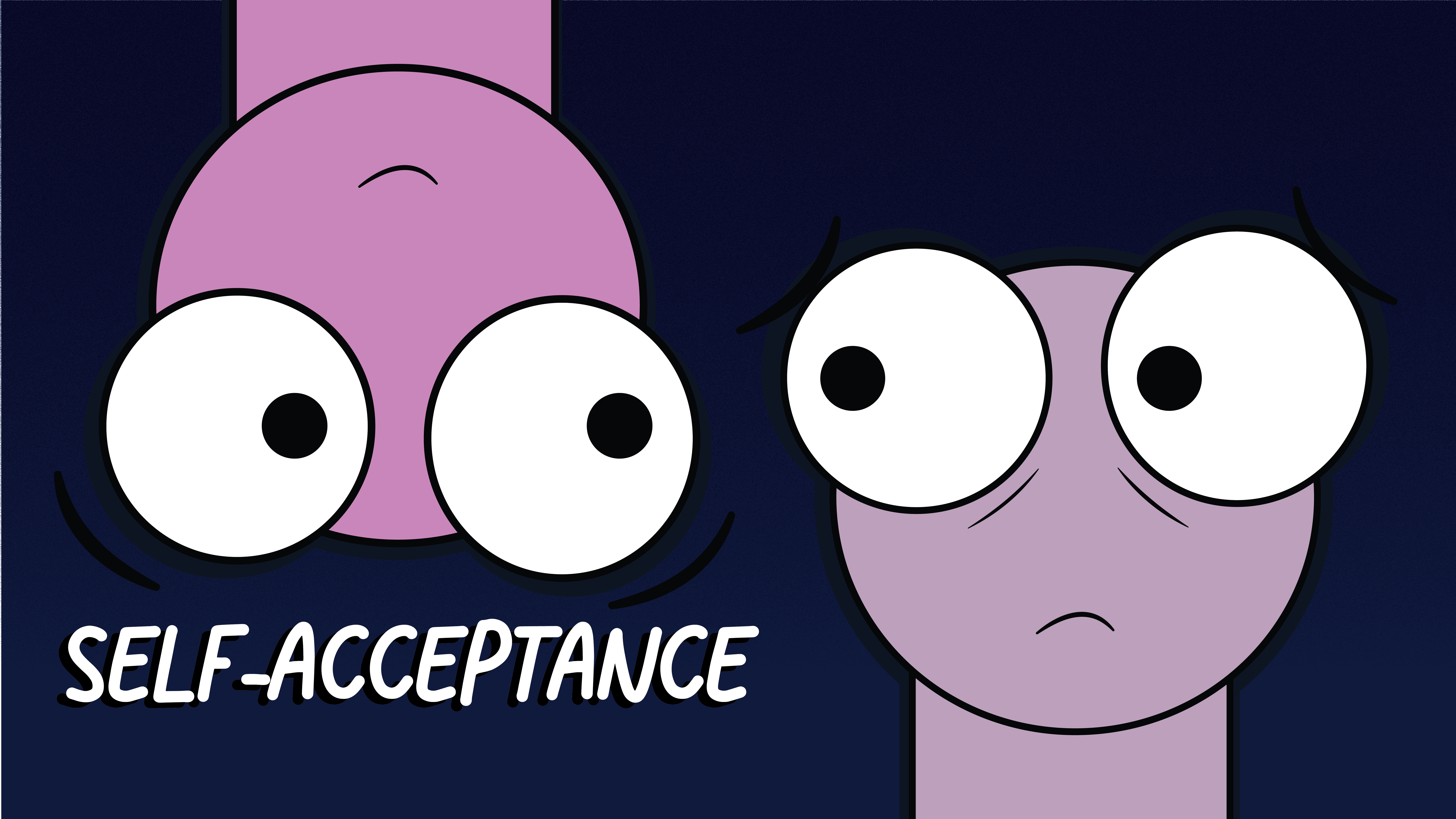
In connection with Creative Conscience, we were tasked with creating a short animation that entales clear narrative to the viewer as well as using or skills and knowledge to include motion and audio to the story.
Self acceptance is an informative short animation that purely focuses on how we should learn to accept ourselves for who we are and not let our actions & choices be affected by what we see online. This is a collaborative project between Priya Ellis, Charlie Tootell, Oscar Pulsford & Alexander Nessia.
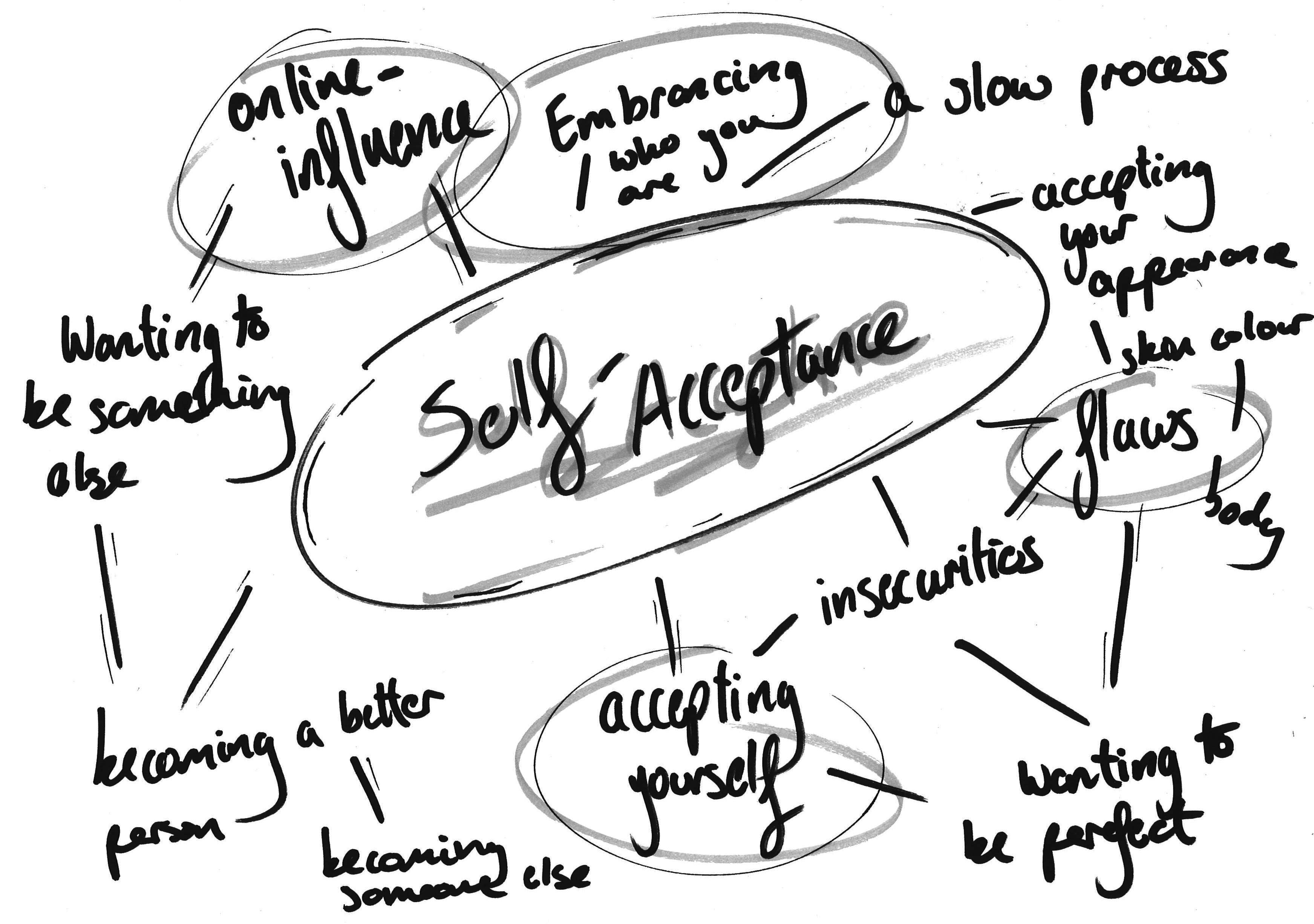
When choosing a theme for this project, we initially gravitated toward physical health and fitness, as each of us incorporates physical activity into our lives in unique ways.
However, after receiving feedback during the first week, we shifted our focus to the theme of self-acceptance. We felt that this message would be more impactful and meaningful to convey through our animation.
"The number of Brits reporting low self-esteem has tripled in the last two decades from 7% of UK adults in 2004 to 20% today according to a new survey that suggests the nation is in a ‘Self-Esteem Slump’ post Covid."
"There is evidence of increasing anxiety and depression among young women aged 16 to 24 years in the UK, with nearly one-third (31%) reporting some evidence of depression or anxiety in 2017 to 2018; this is an increase from the previous year (26%) and the same period five years earlier (26%)."
For this particular animation, we chose to collaborate with CALM (Campaign Against Living Miserably), as we strongly believe that their mission aligns perfectly with the message we aim to convey. CALM’s commitment to mental health awareness resonates deeply with the themes we wish to explore, making them the ideal partner for this project.
For this animation, our primary target audience is young men with low self-esteem. However, the animation is designed to resonate with a broader audience, as a central theme is how social media can influence individuals, leading to unhealthy comparisons.
We chose to aim towards young men, primarily because young men are most likely to be influenced more by social media compared to those 30+ years older or more.
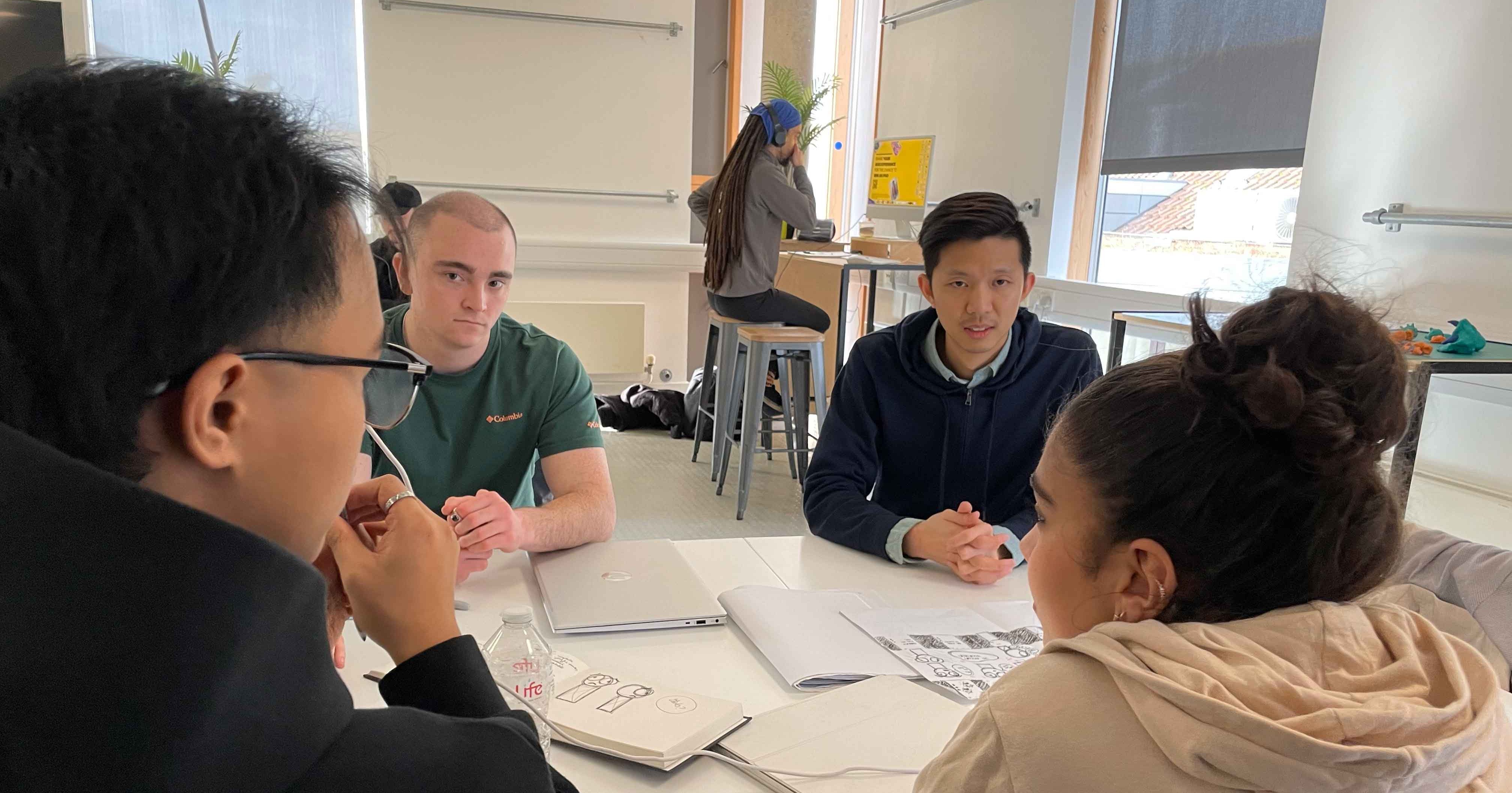
In the first few weeks, we created several storyboards to outline the animation. Our goal was to ensure that each scene clearly conveyed the imagery, while incorporating a variety of angles. We collaborated closely, discussing each scene in detail and carefully deciding how it should unfold to effectively communicate our intended message.
The process of creating these storyboards took time, as we had differing opinions on how certain scenes should be executed. We also had to take into account the timing and pacing of the animation to ensure everything flowed smoothly.
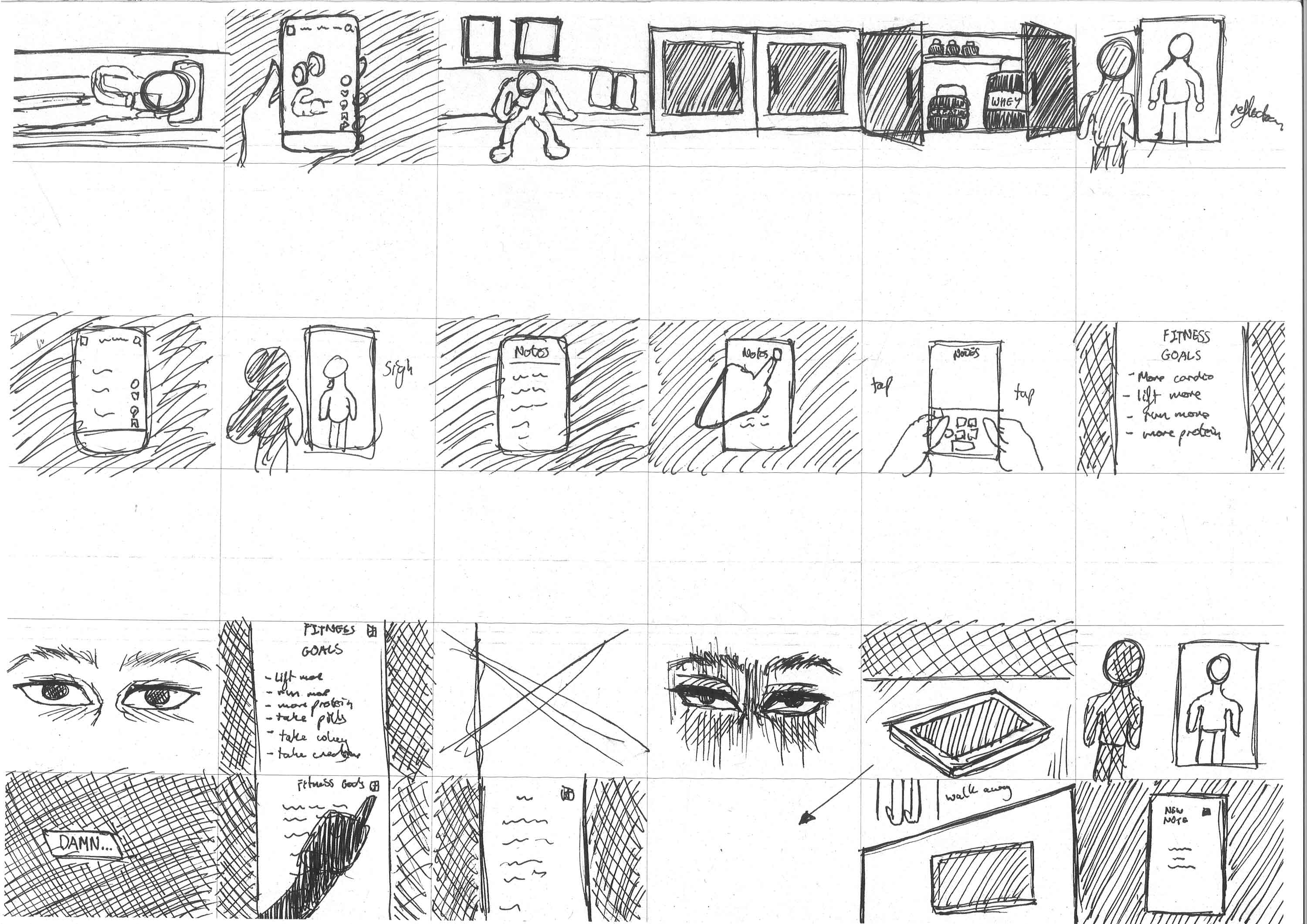
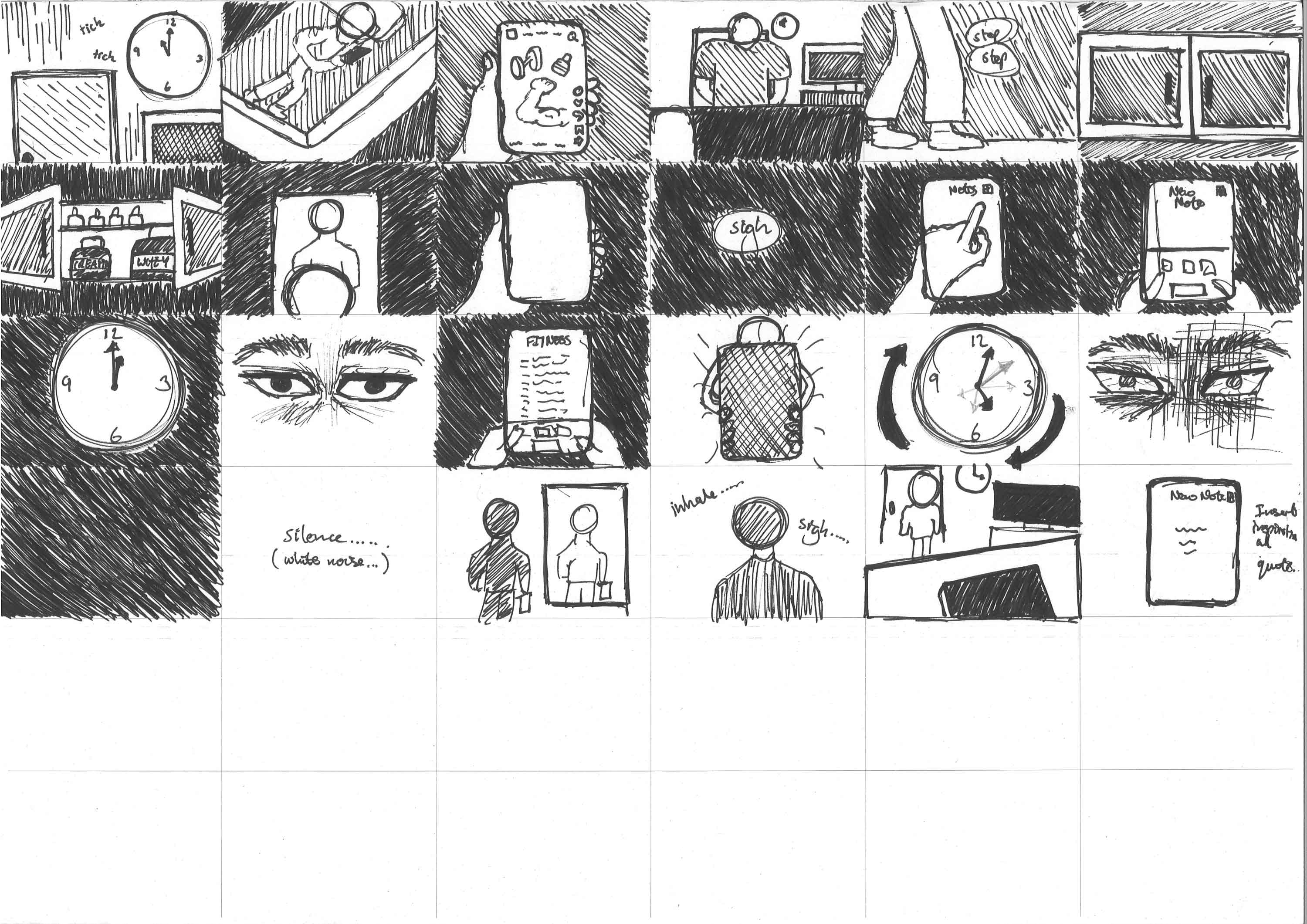
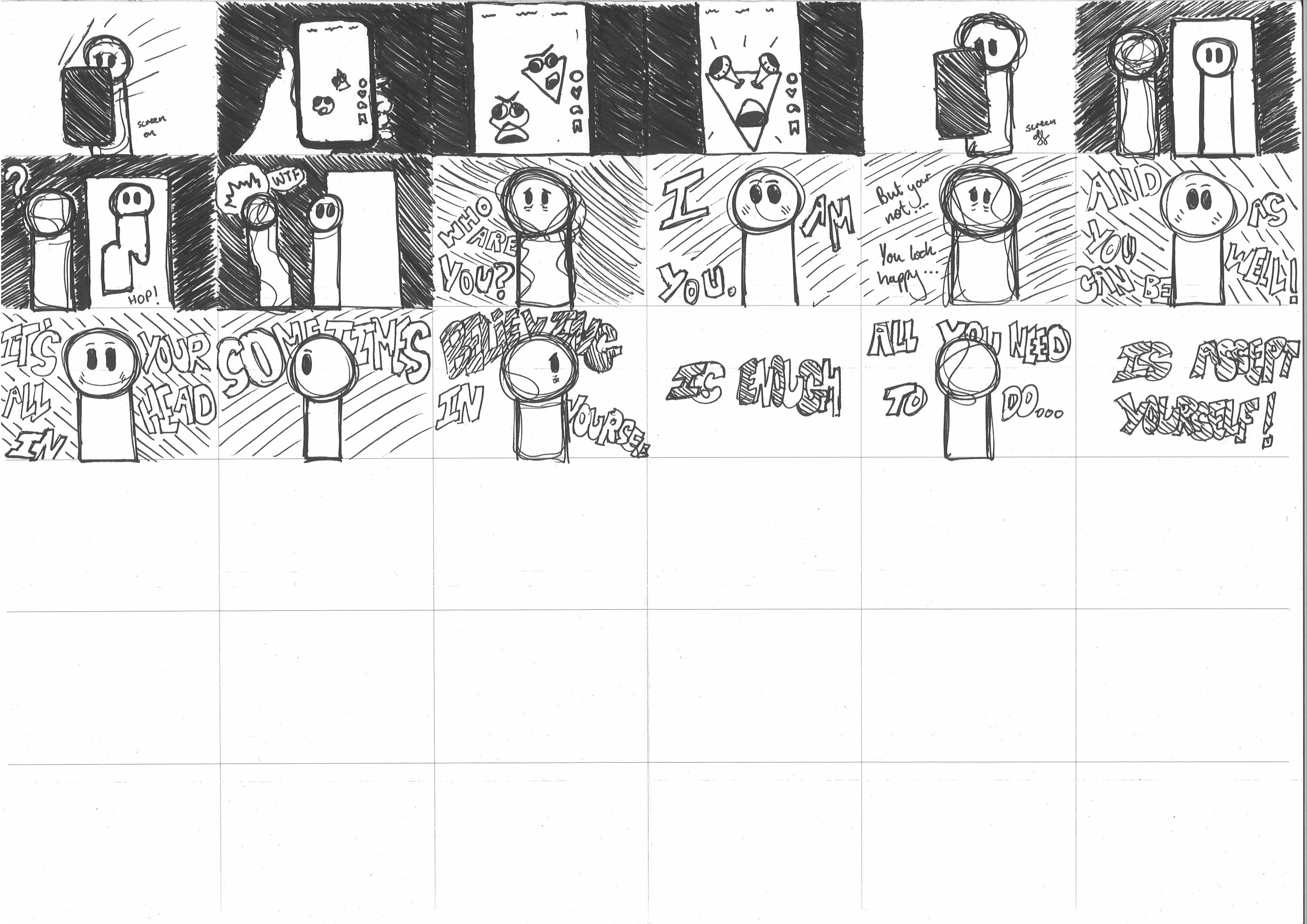
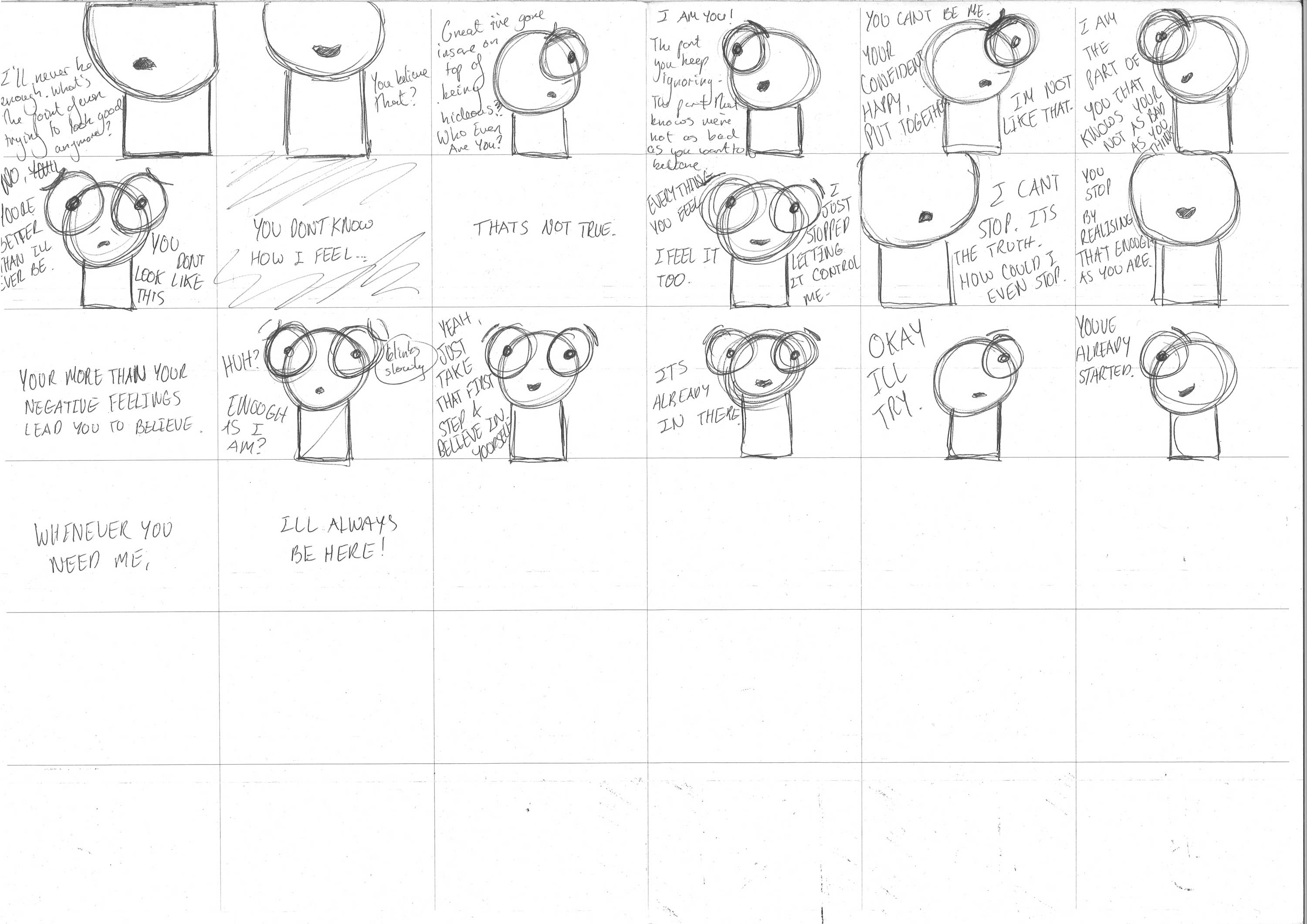
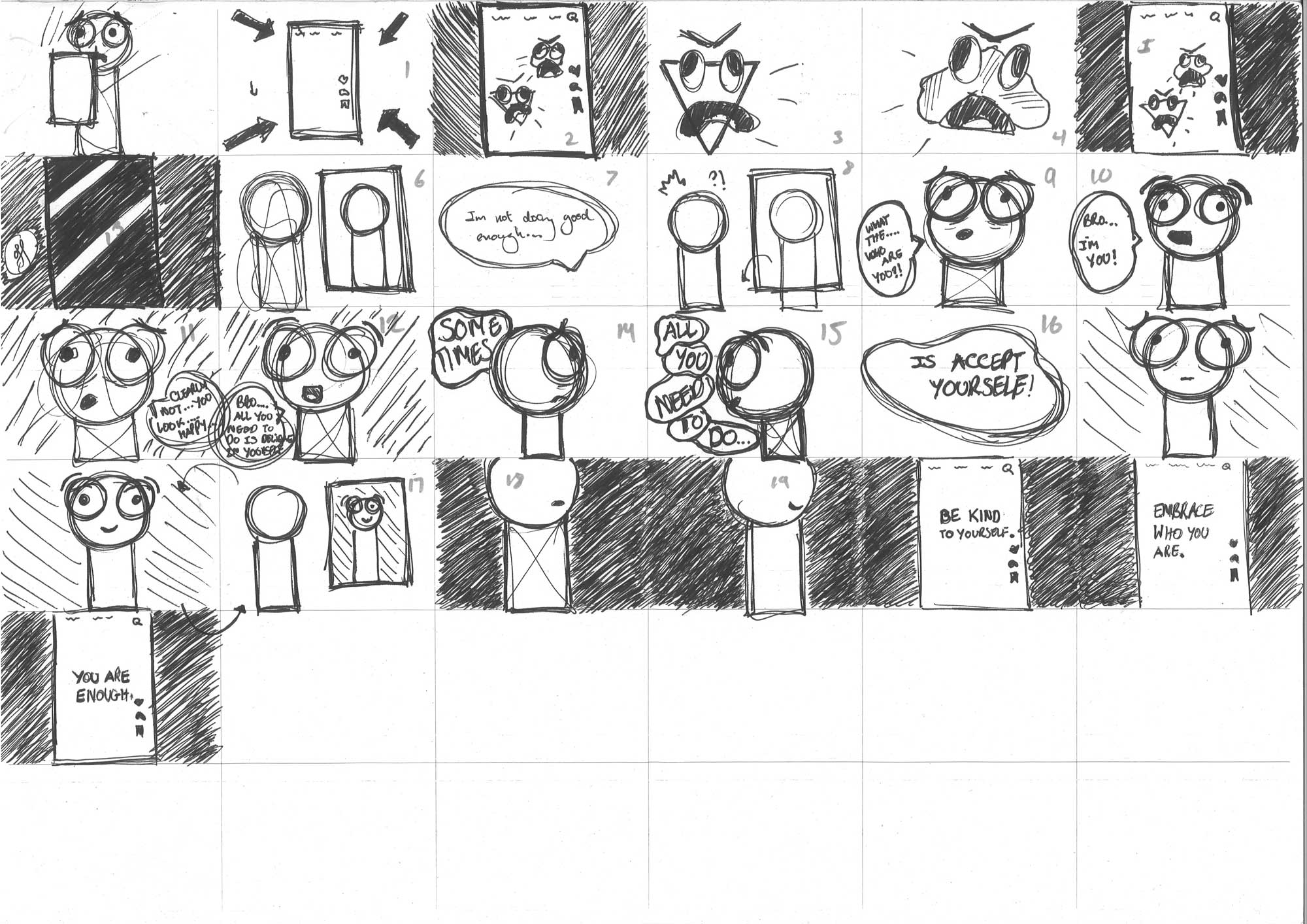
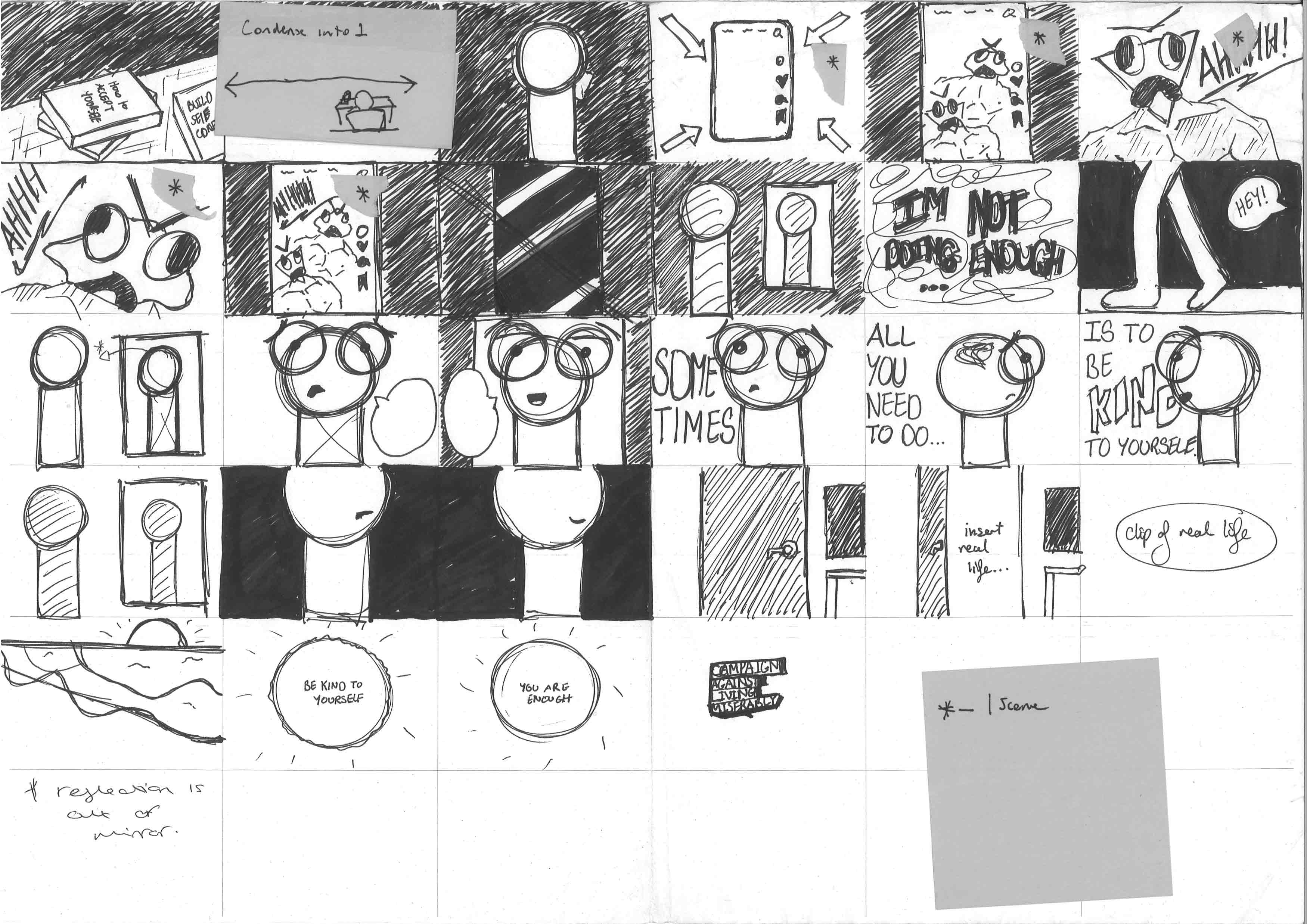
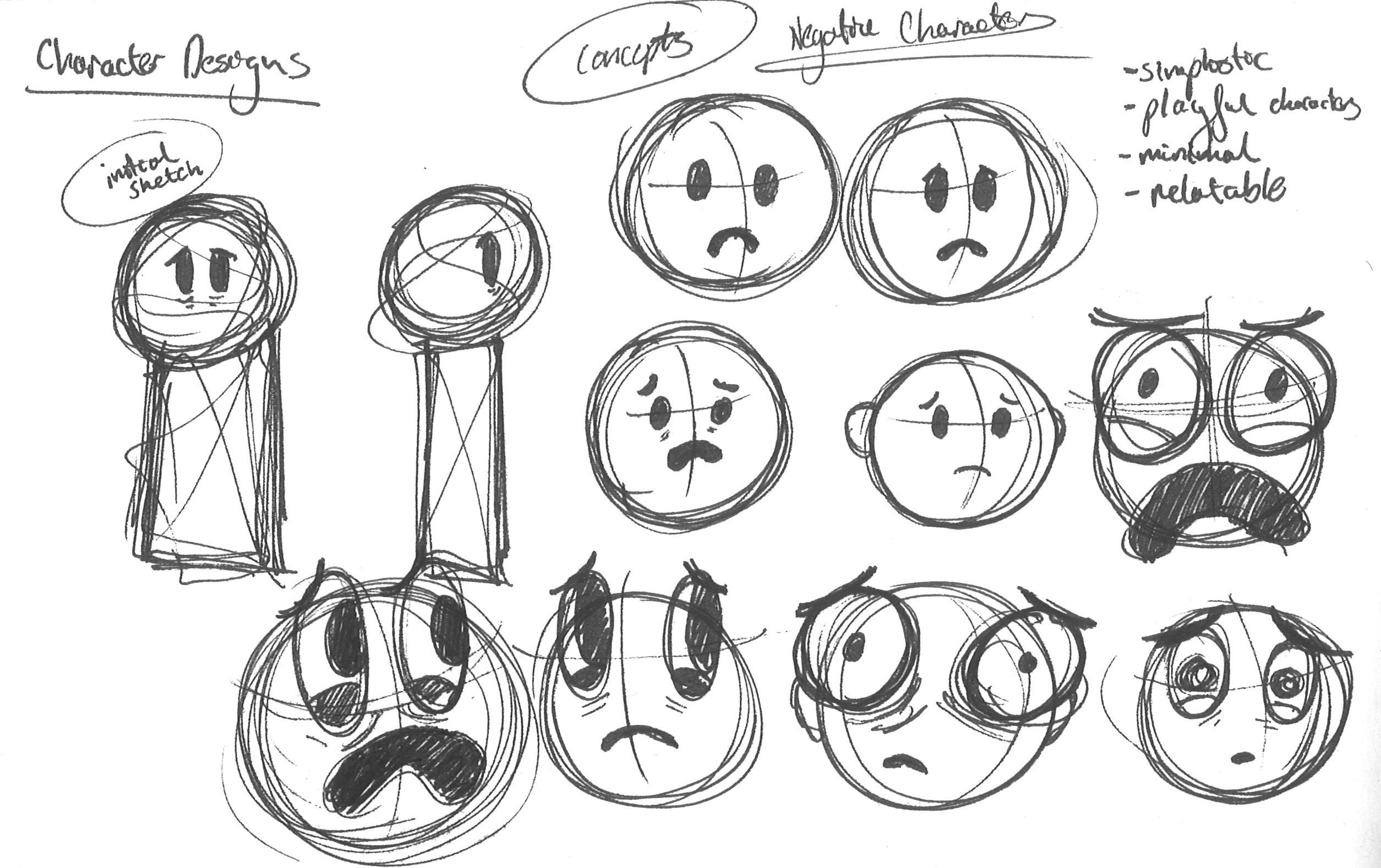
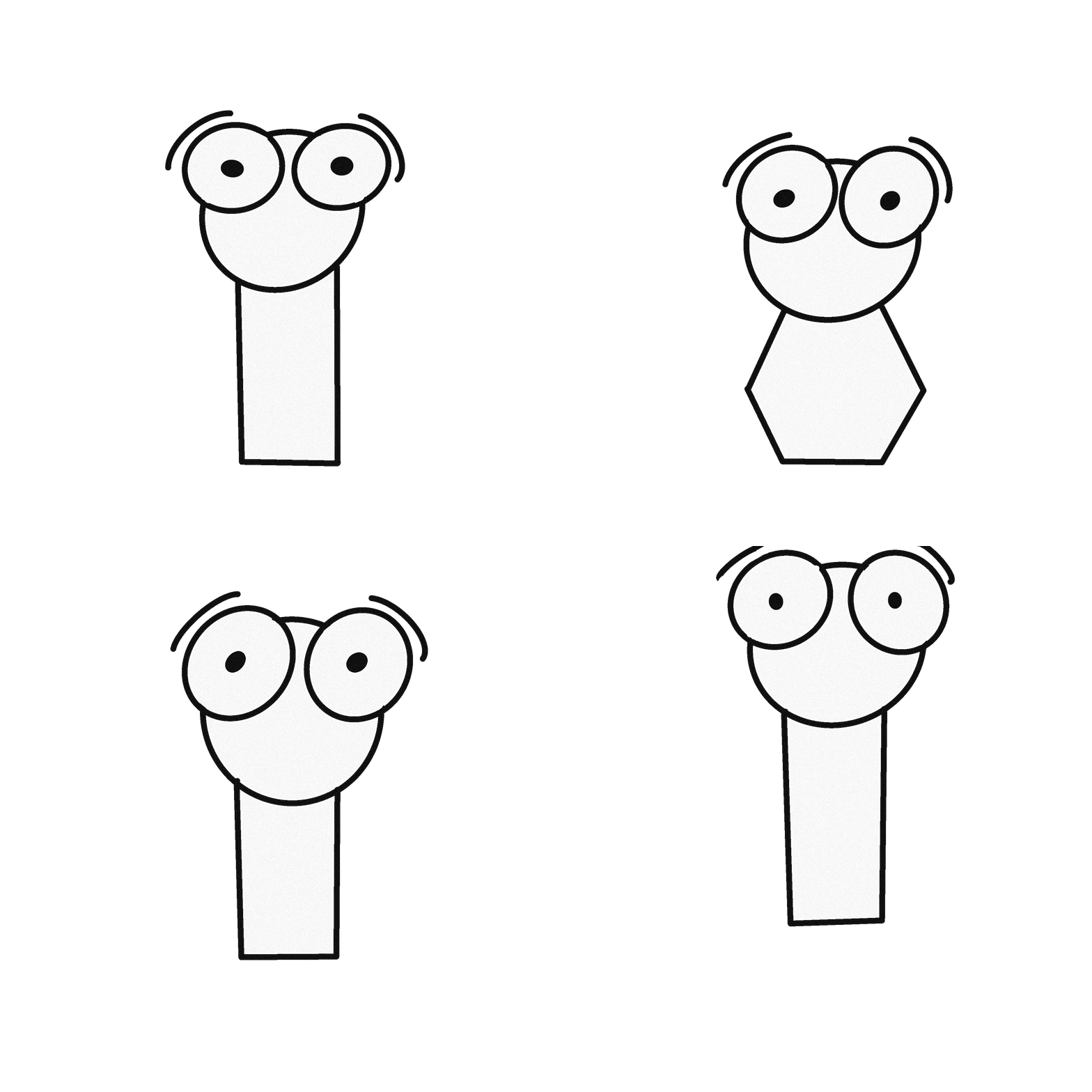
When designing the character, we aimed for a simple, minimalistic style without unnecessary complexity. Our goal was for the character to convey a sense of weariness and anxiety, so we experimented with various facial expressions and art styles, while maintaining an overall clean and pared-down look.
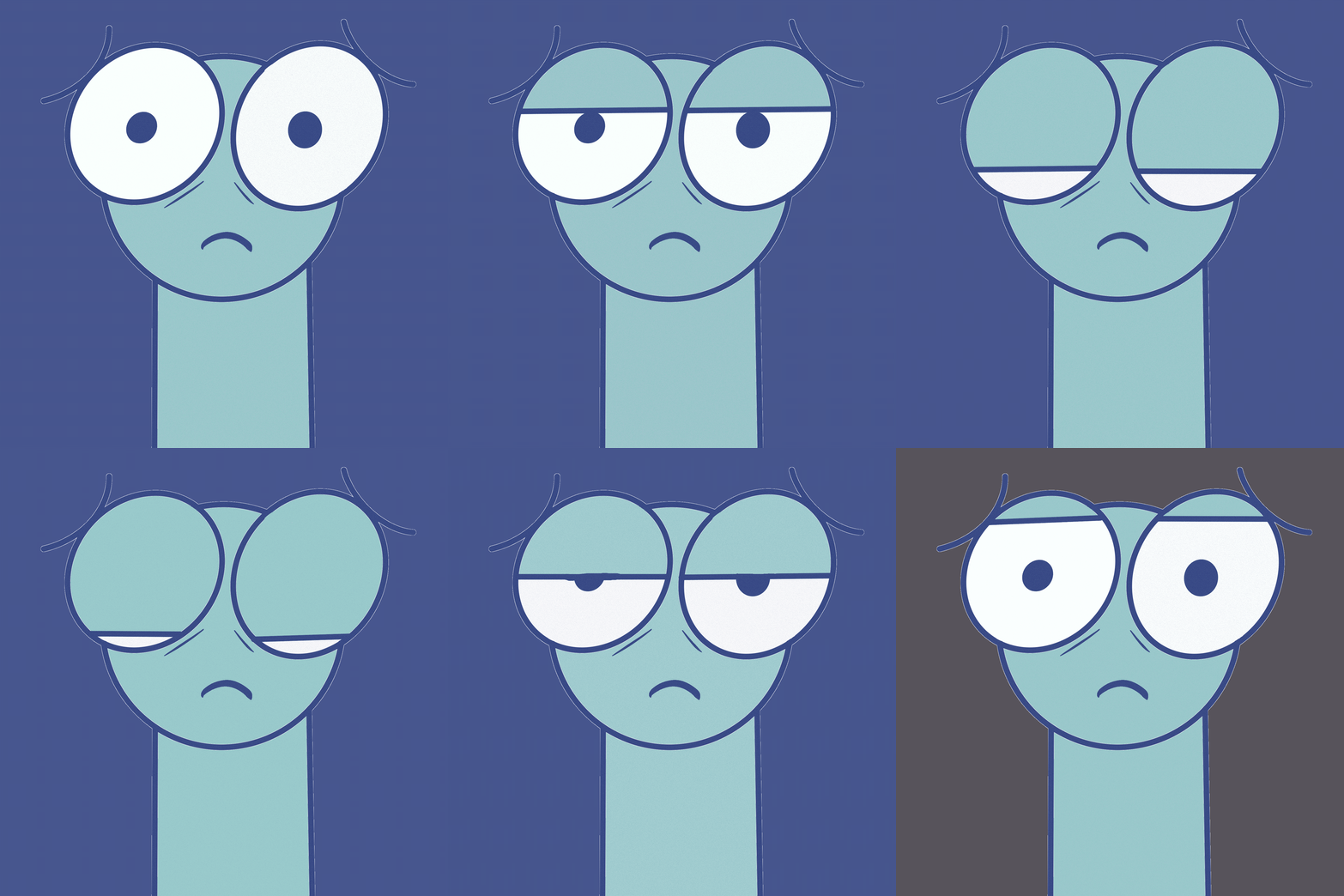
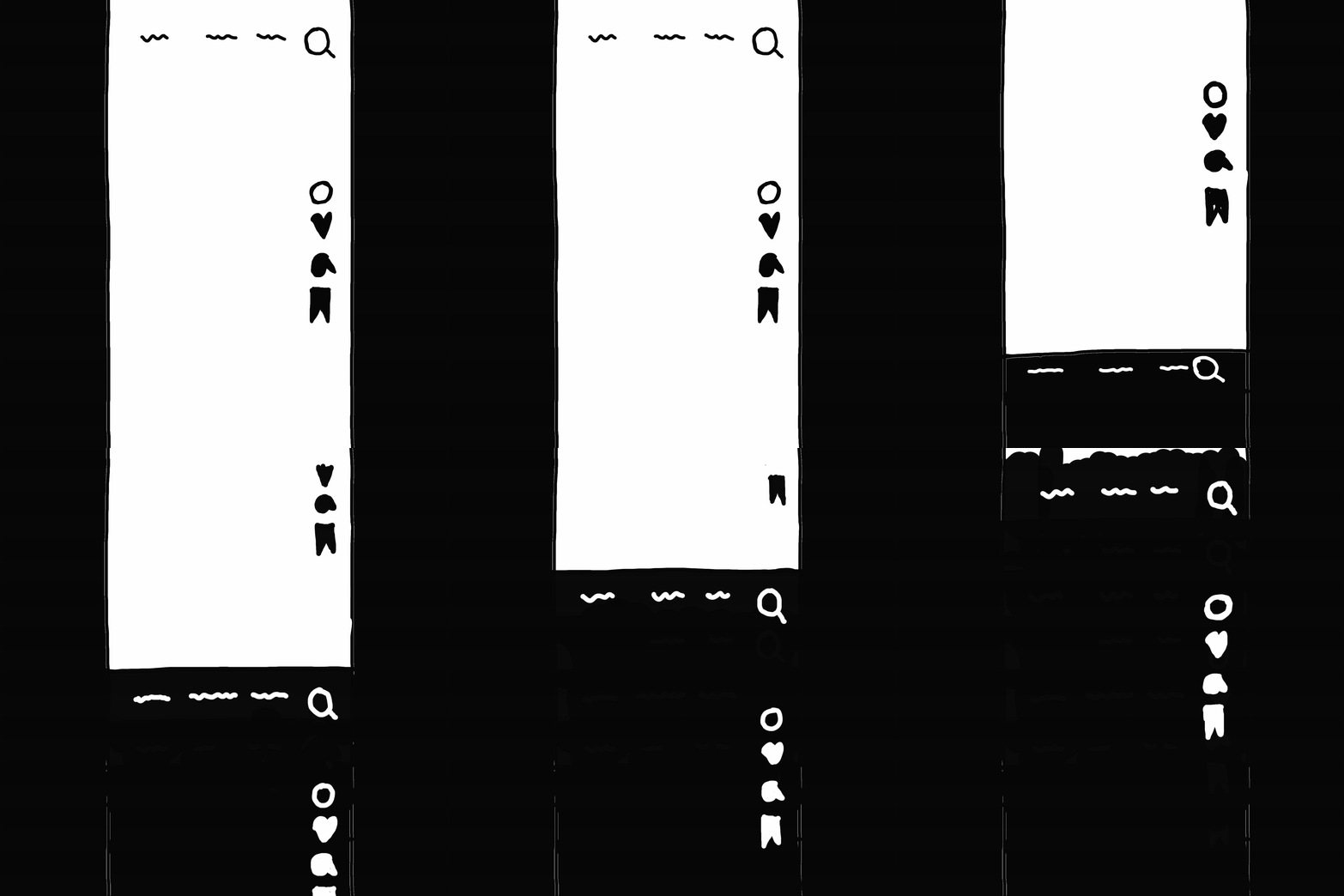
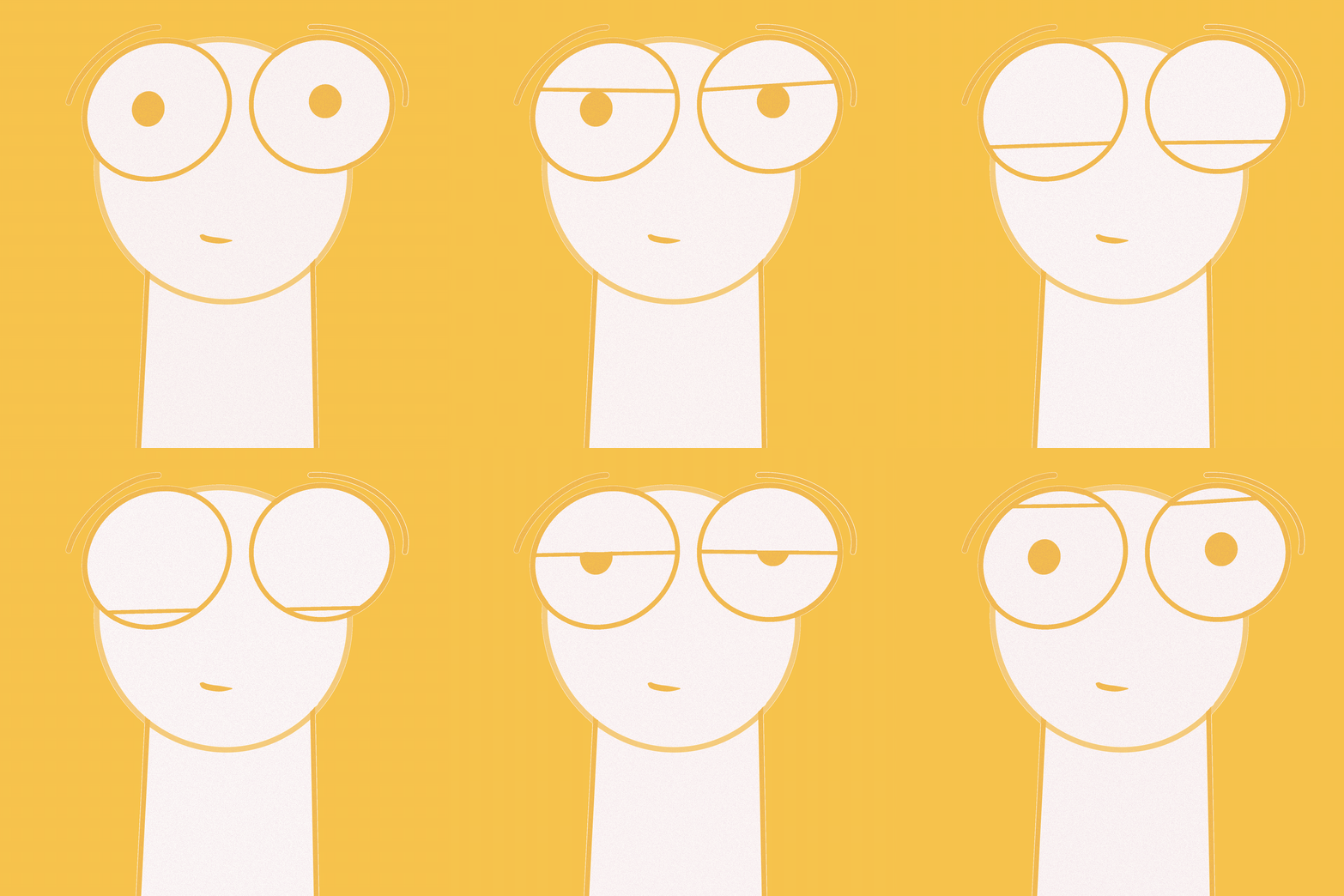
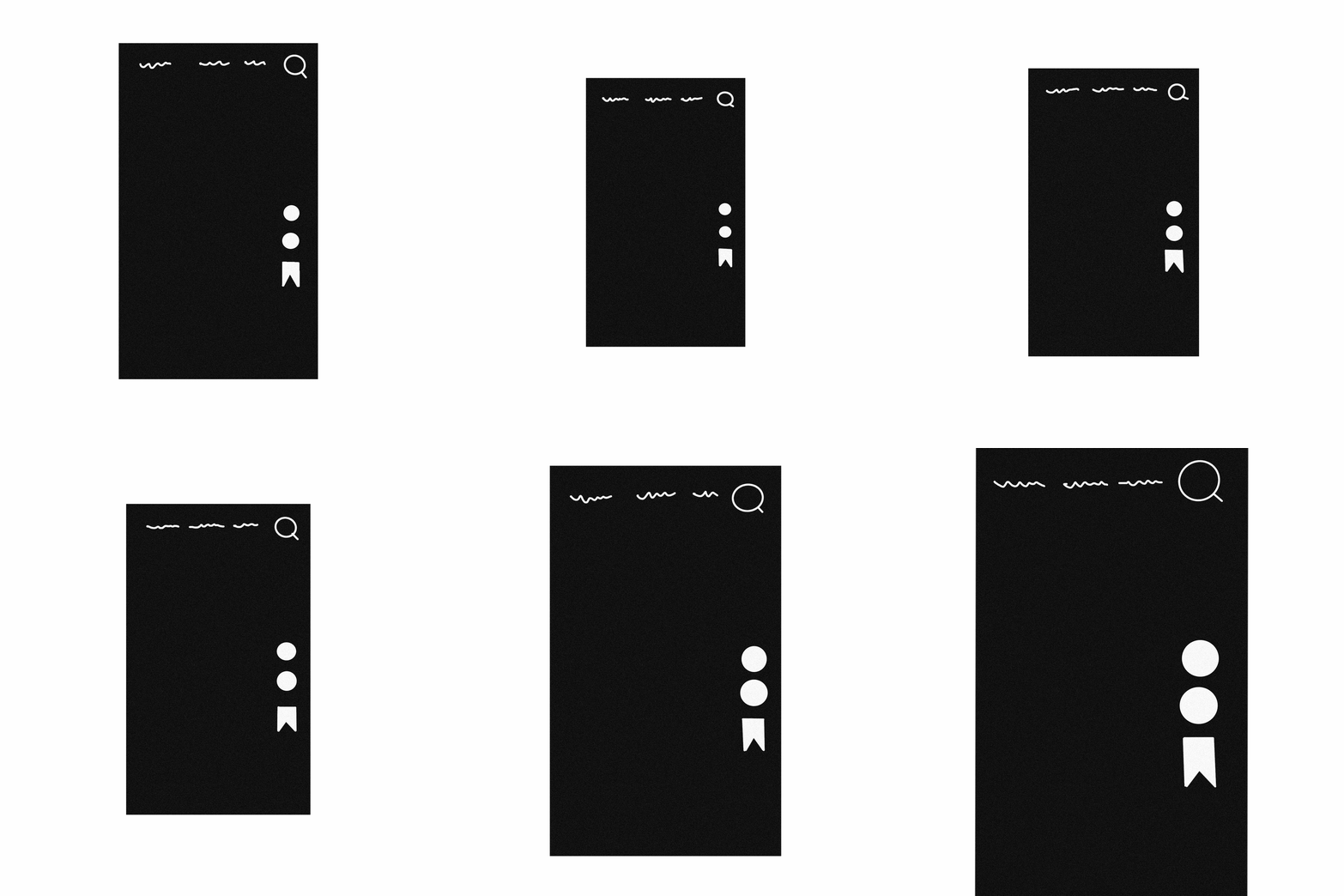
When designing the two characters, I explored Procreate—an unfamiliar tool to me at the time—by experimenting with small animations. I created simple looping blinks for each character to better understand how they would look and feel on screen.
Although it was my first time using the software, I was pleased with the results. However, I chose not to animate in Procreate for the project, as the process proved too time-consuming.
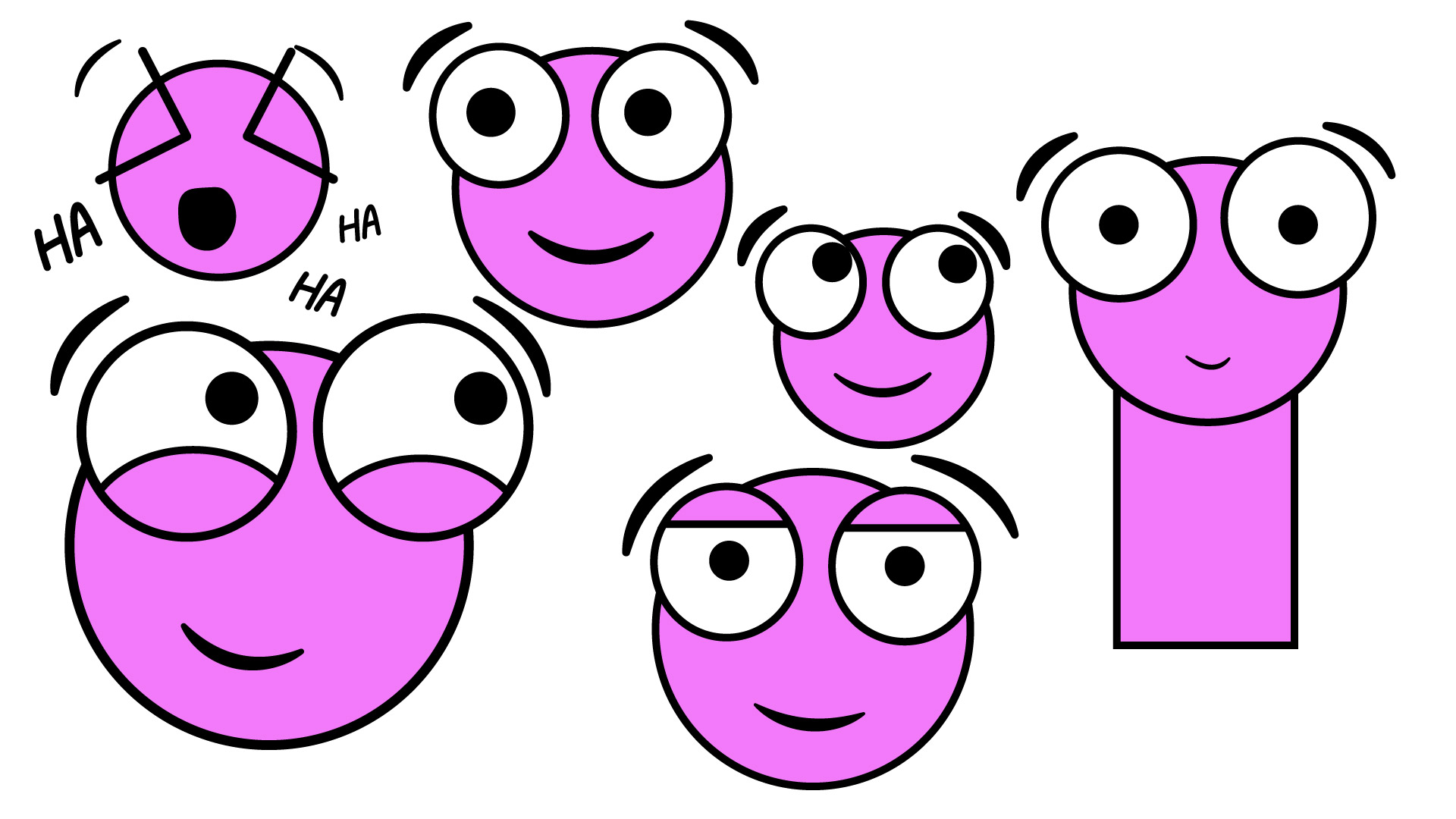
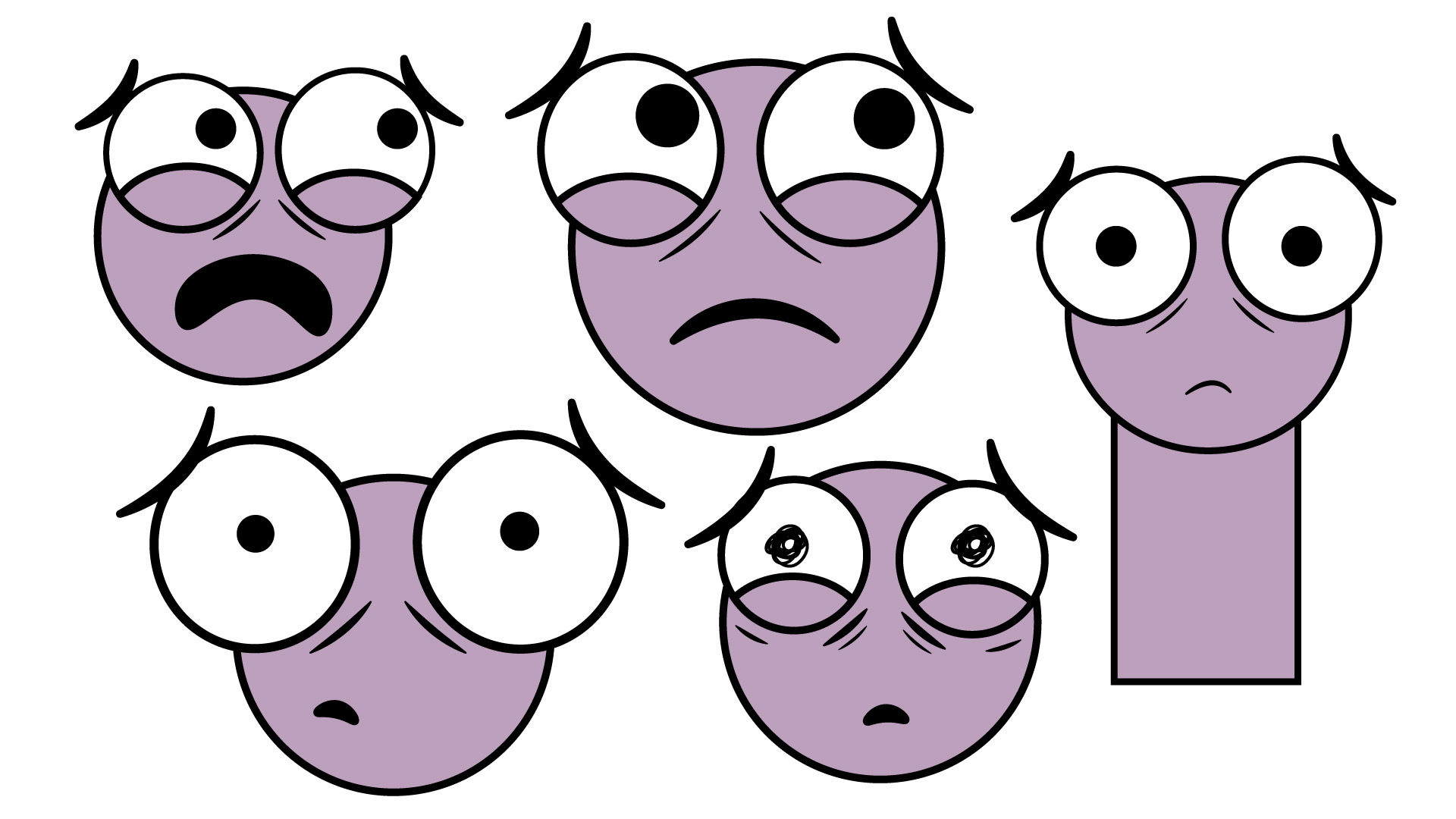
Here, I began to digitise the two characters in Adobe Illustrator. As a group, we decided to have the characters their own shade of purple/pink since the colours fitted better in the rooms colour scheme.
When digitising them, I played around with both character's facial expressions just to see how the character would look. I tried my best to make the negative character (dark purple) appear more anxious and insecure. In contrast with the positive character (light magenta) who appears more happy, confident and relaxed.
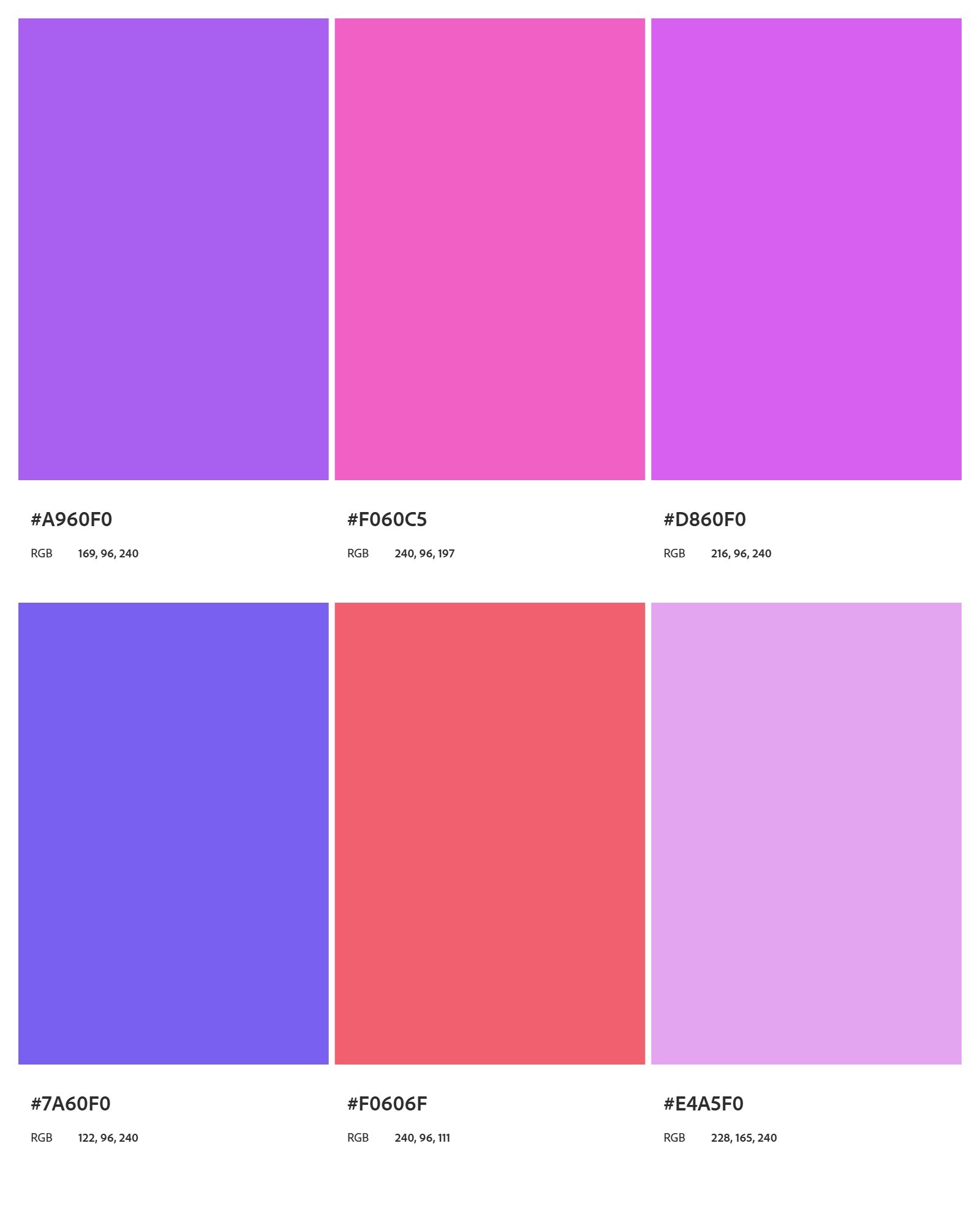
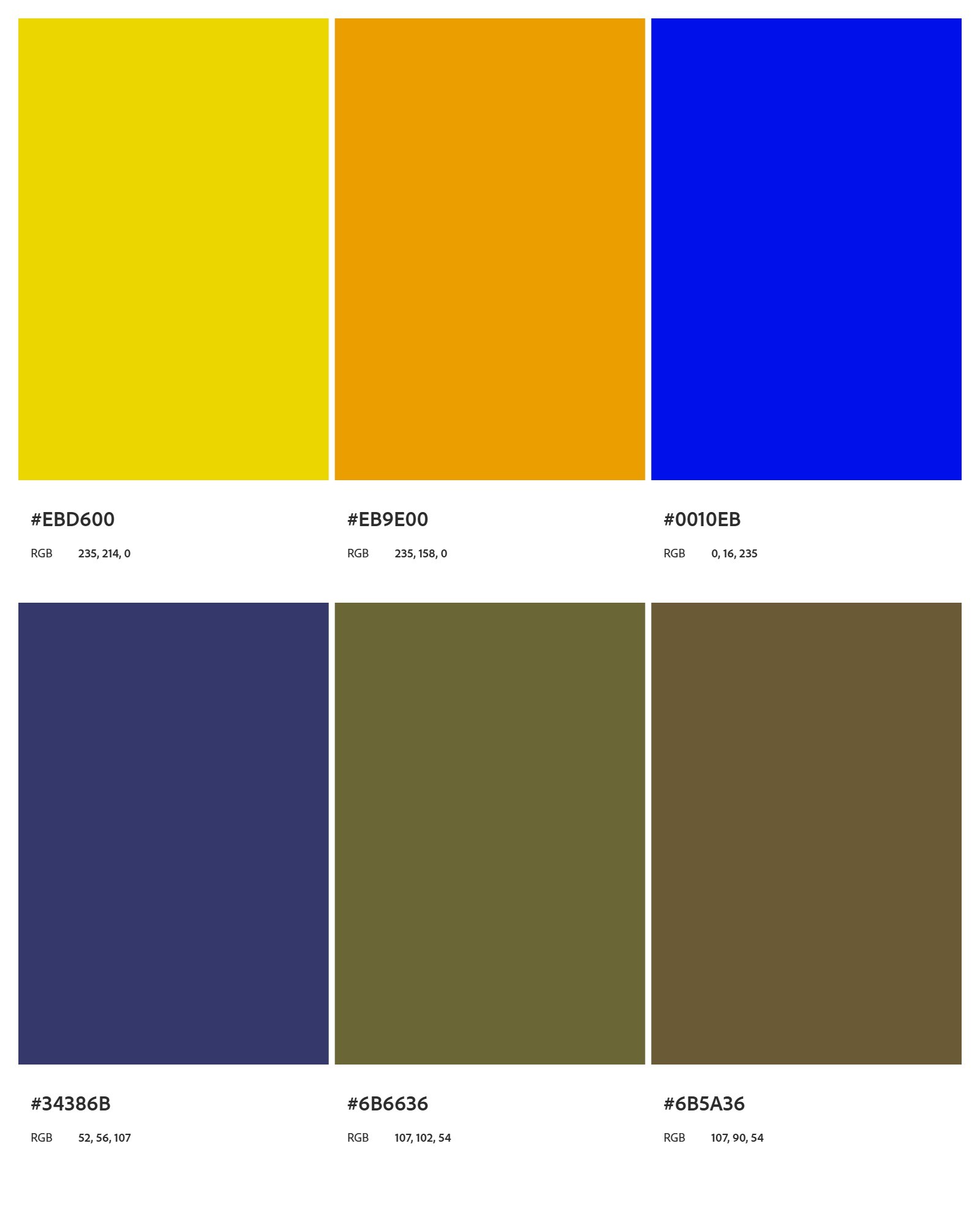
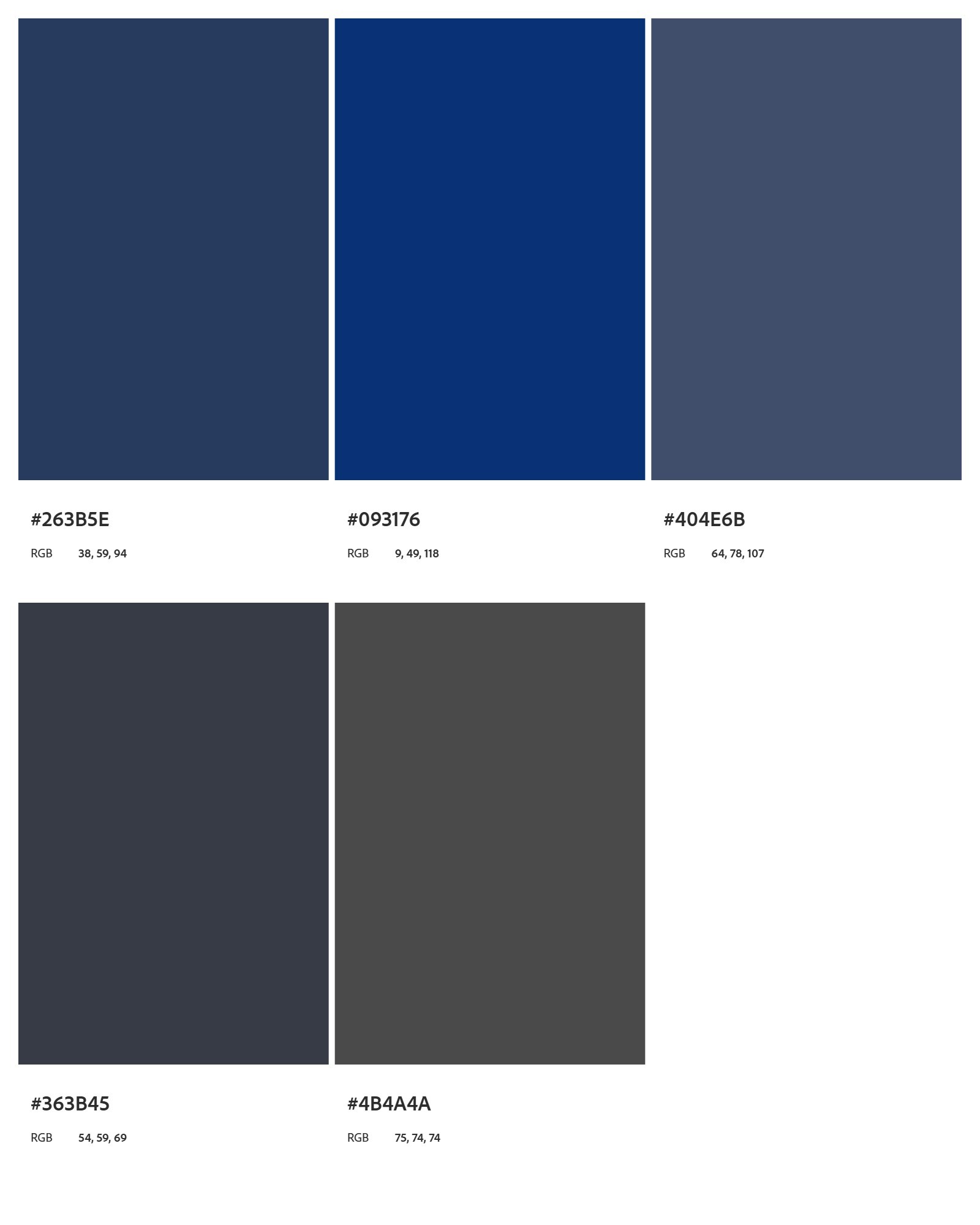
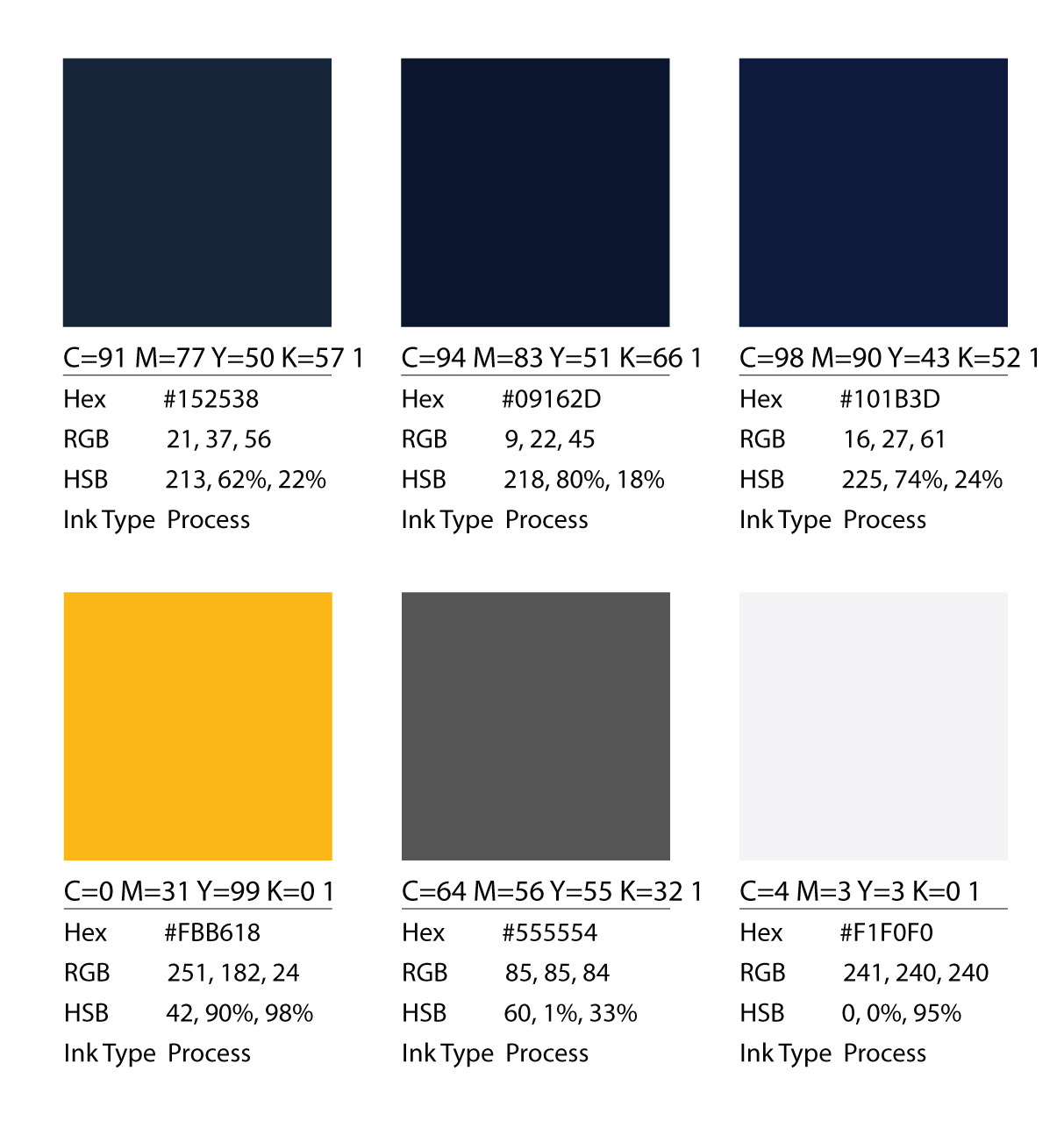
For the colour scheme of the room where the character is set, we looked at a variety of colours that we thought would be best for our characters room.
We wanted the room to appear more dark and gloomy to reflect how the negative character was feeling, but we had to make sure the colours would work well with eachother and be visable within the animation.
After some thinking, we as a group decided to go for multiple shades of dark navy blue for the rooms colour scheme with small parts of the room in bold colours to add a sense of contrast.
We also wanted to include a strong yellow at the end when the door is opening to symbolise that idea of a fresh start within our character.
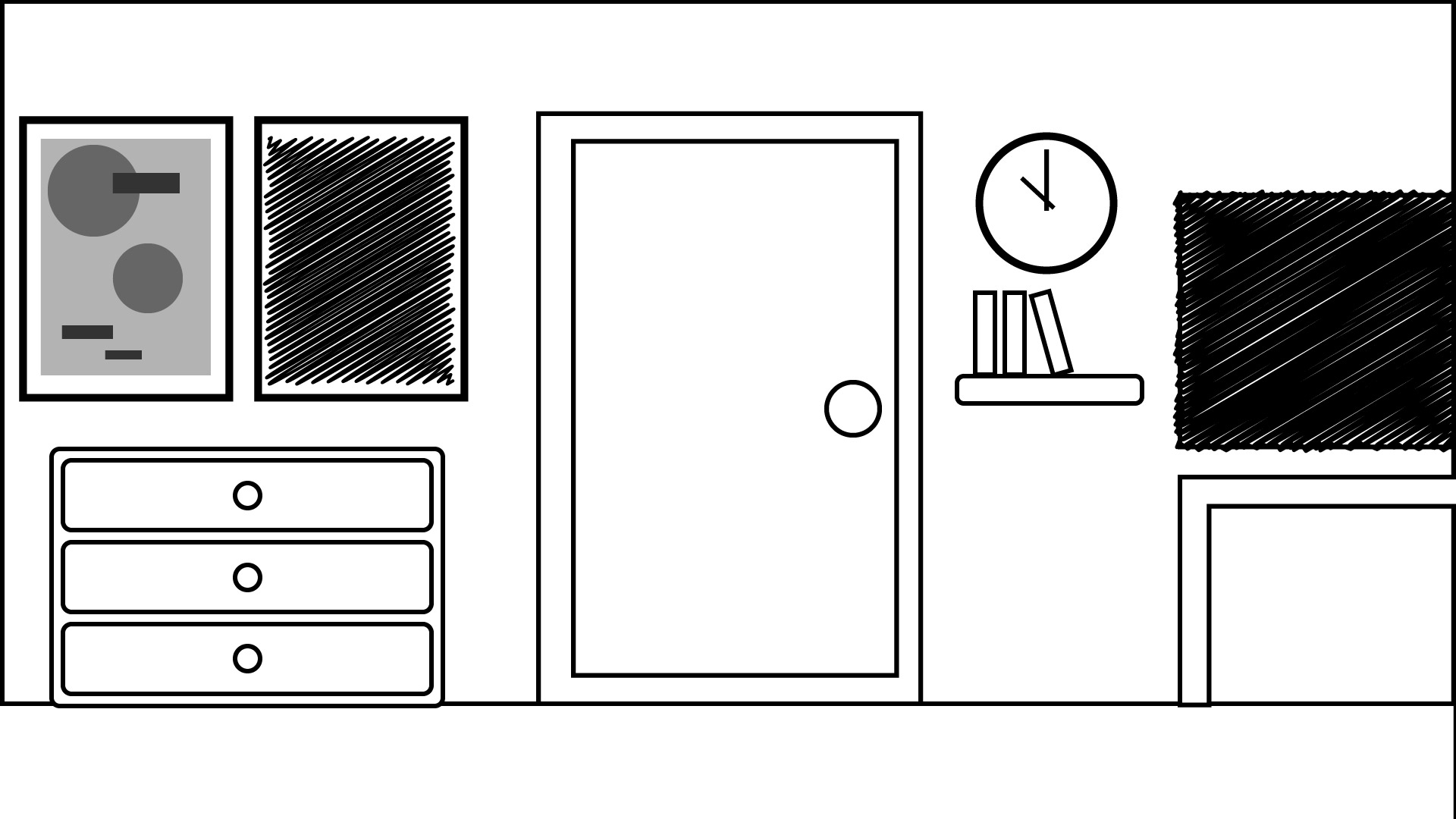
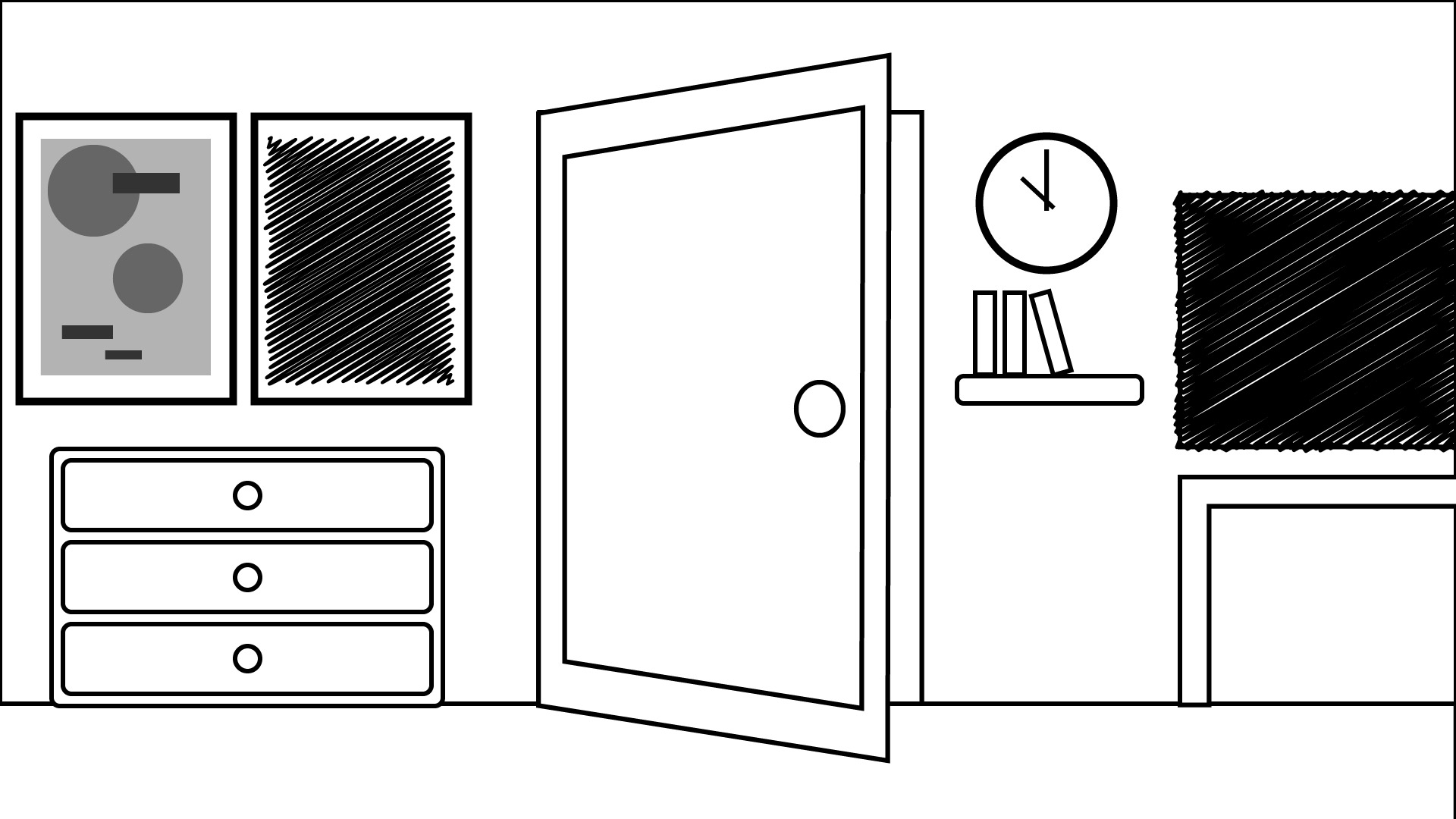
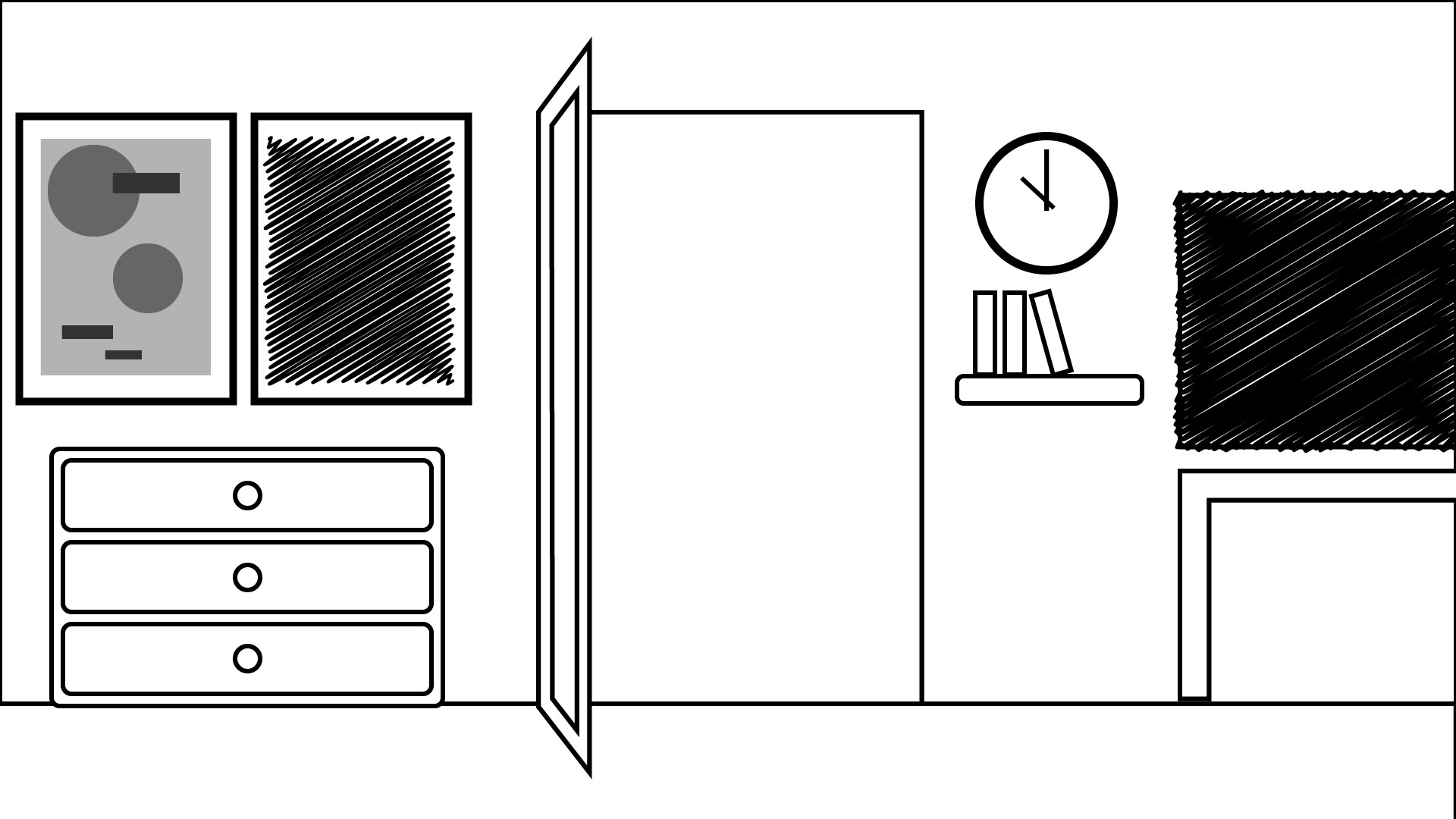
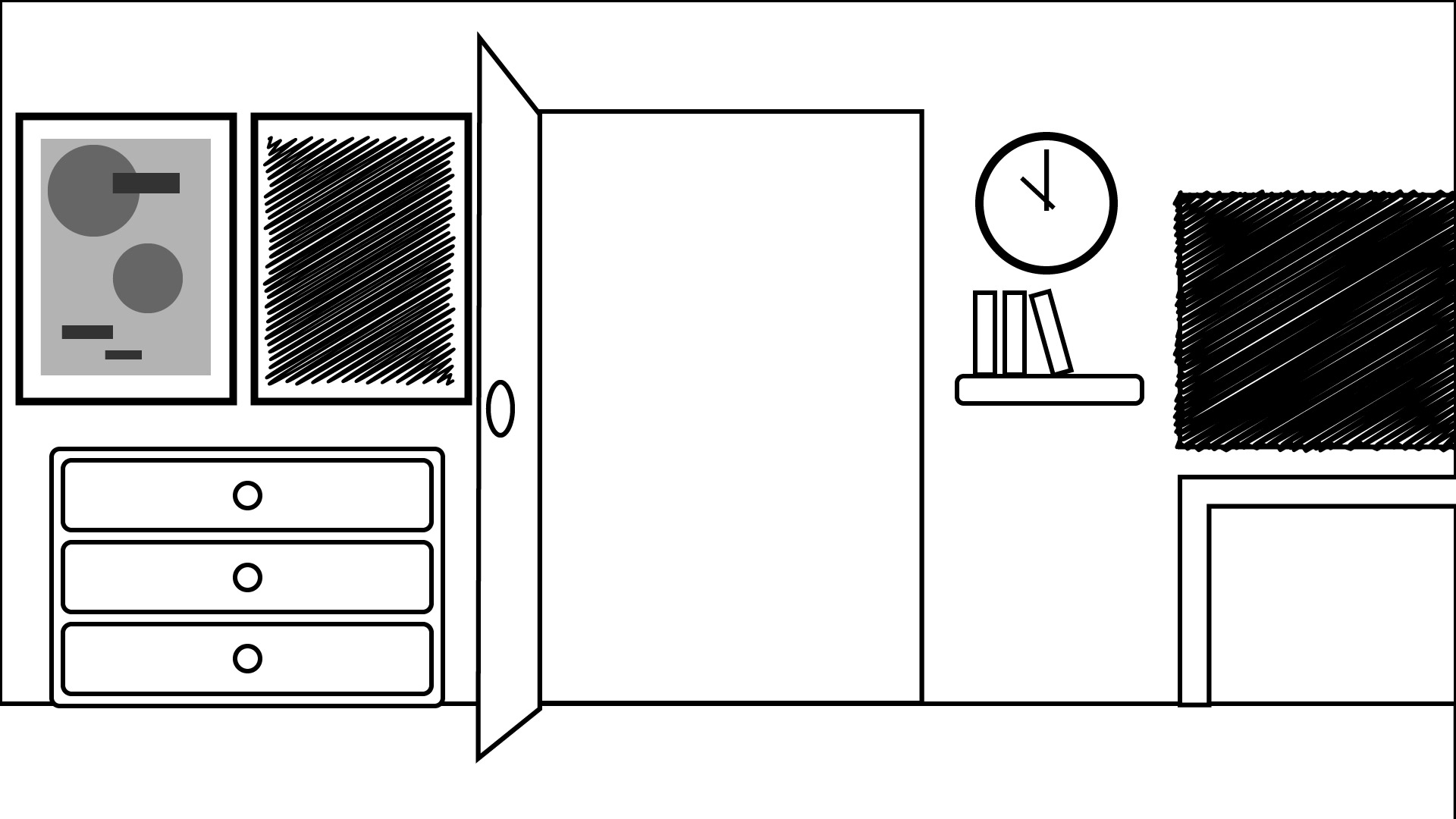
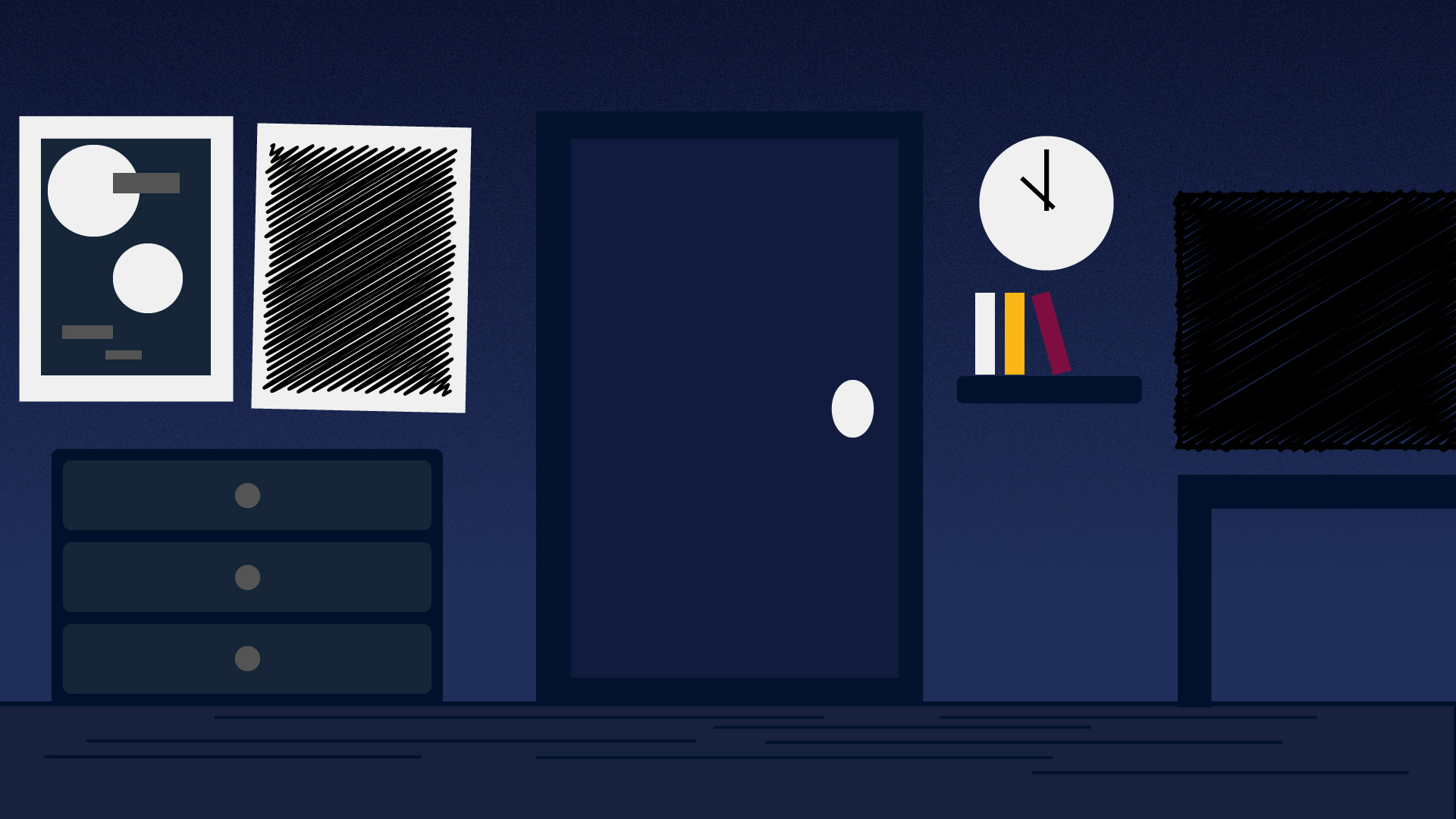
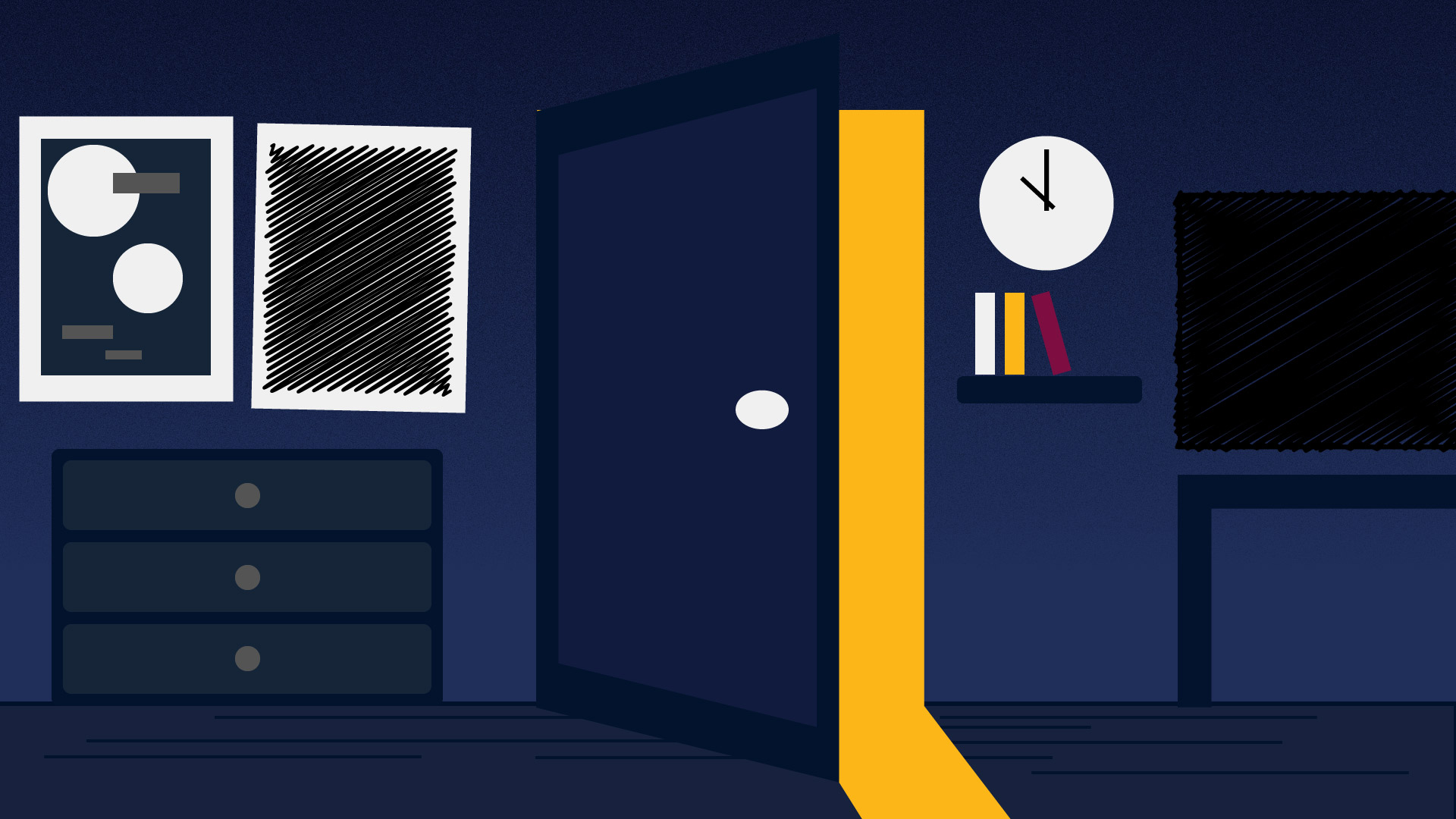
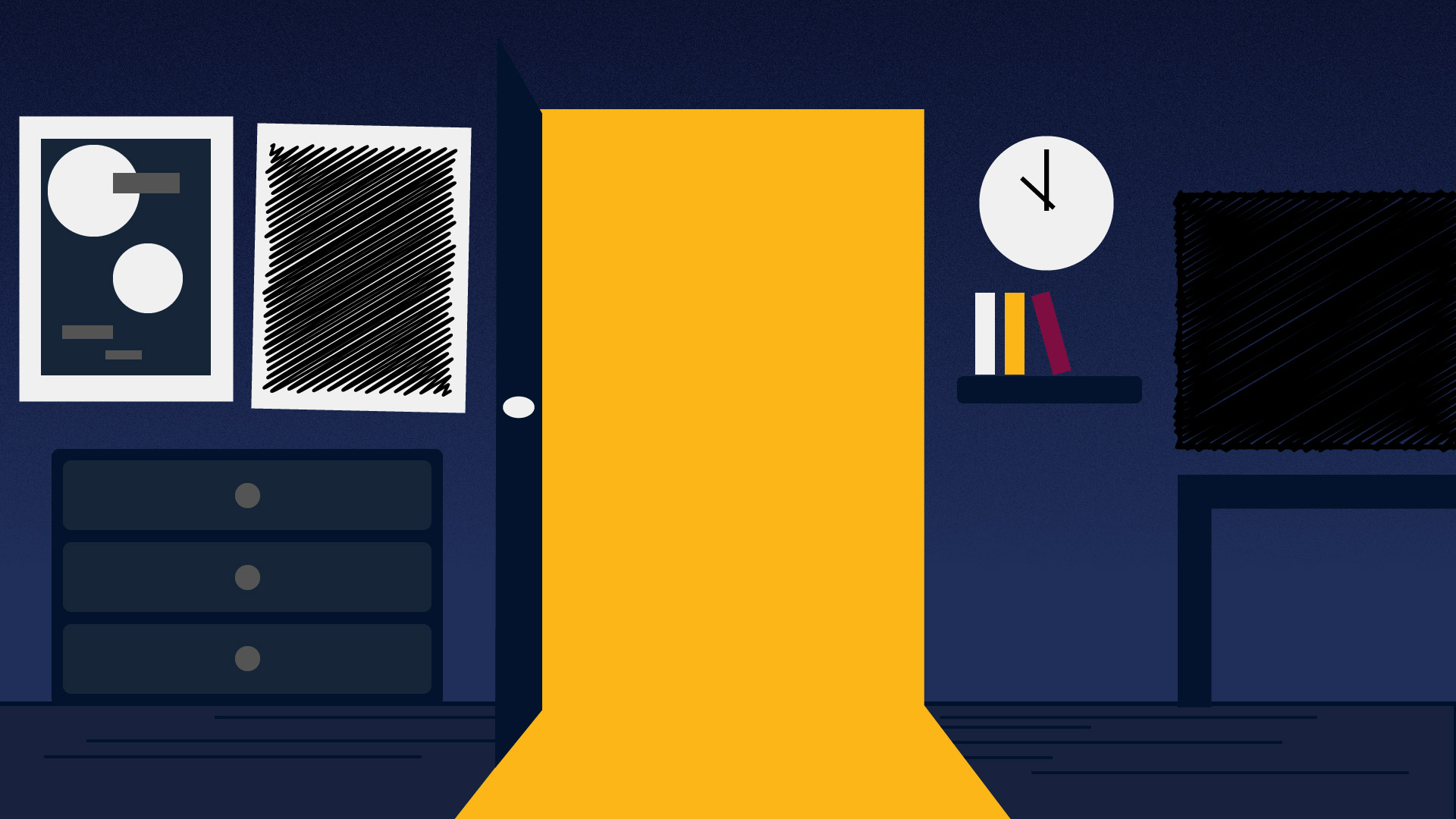
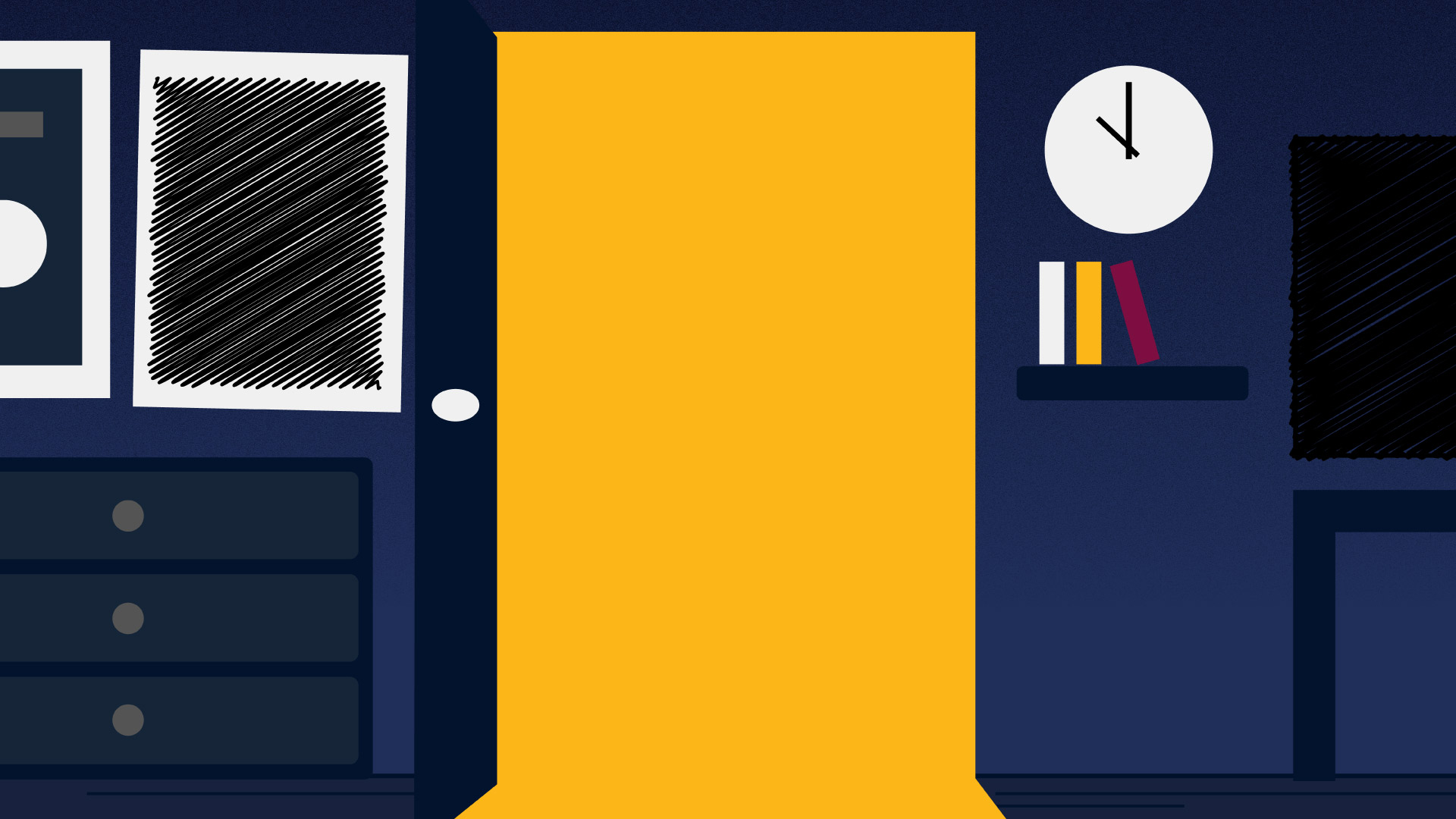
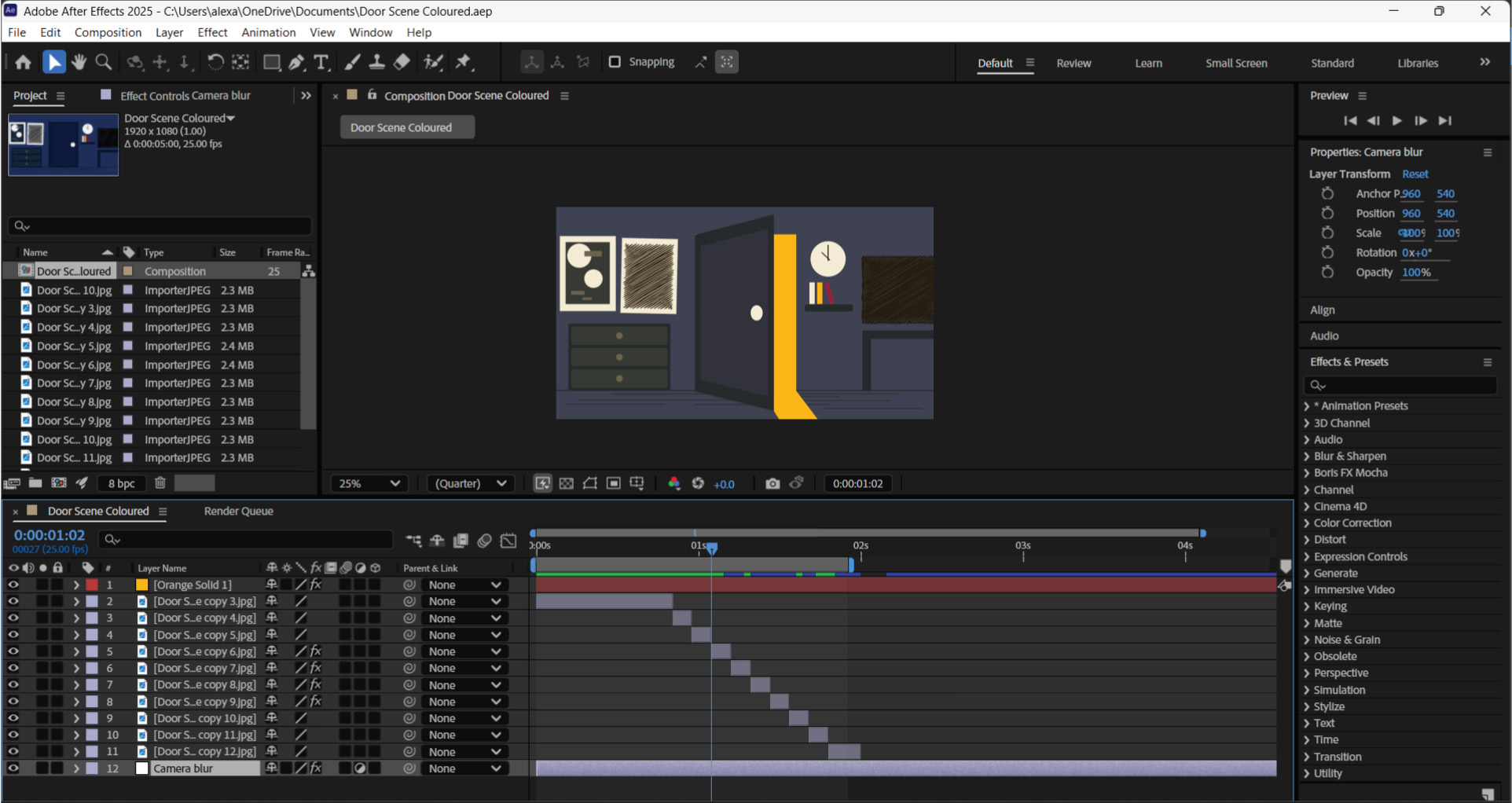
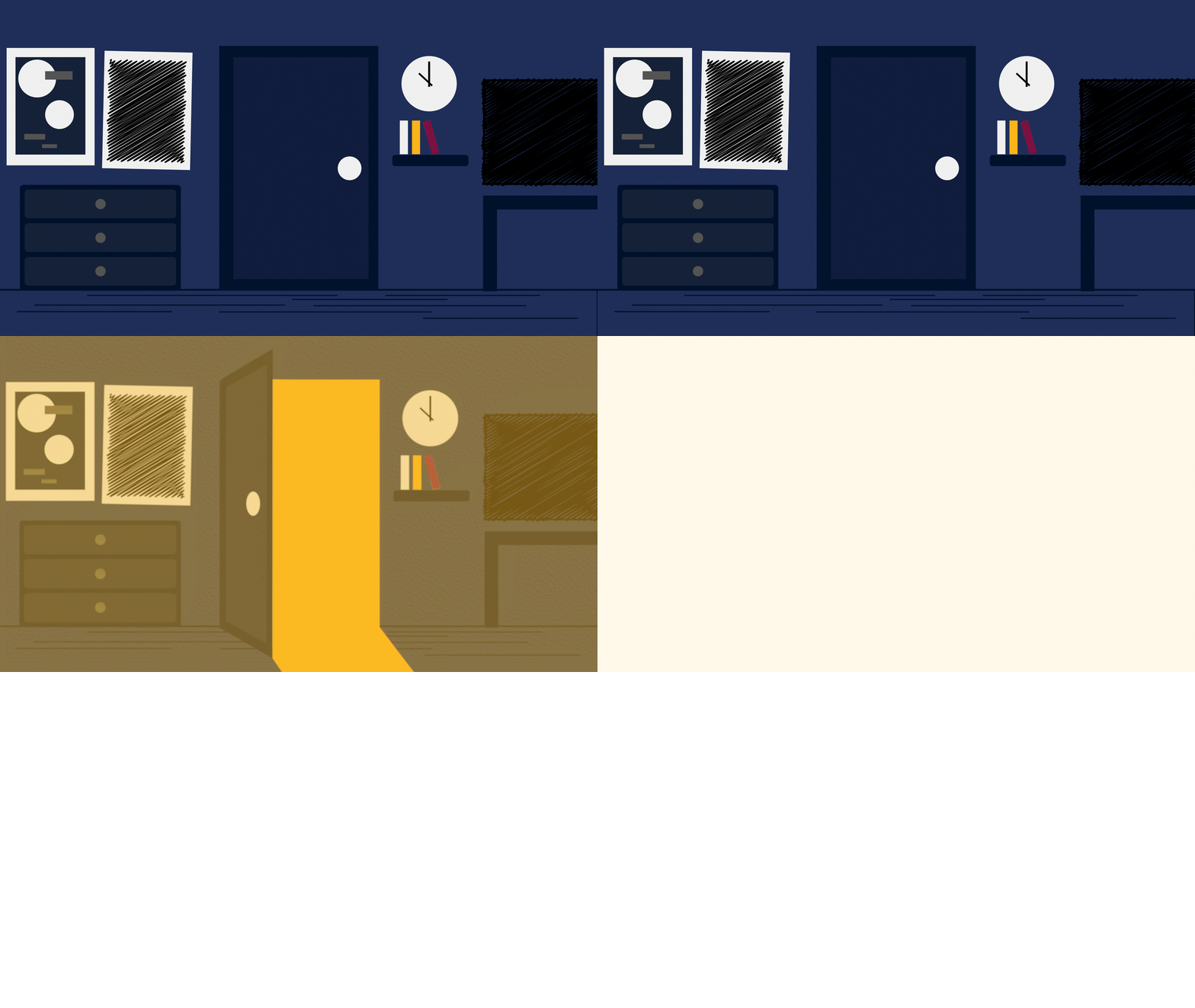
For my part of the animation, I took up the door opening scene since I wanted to challenge myself in animating an object moving.
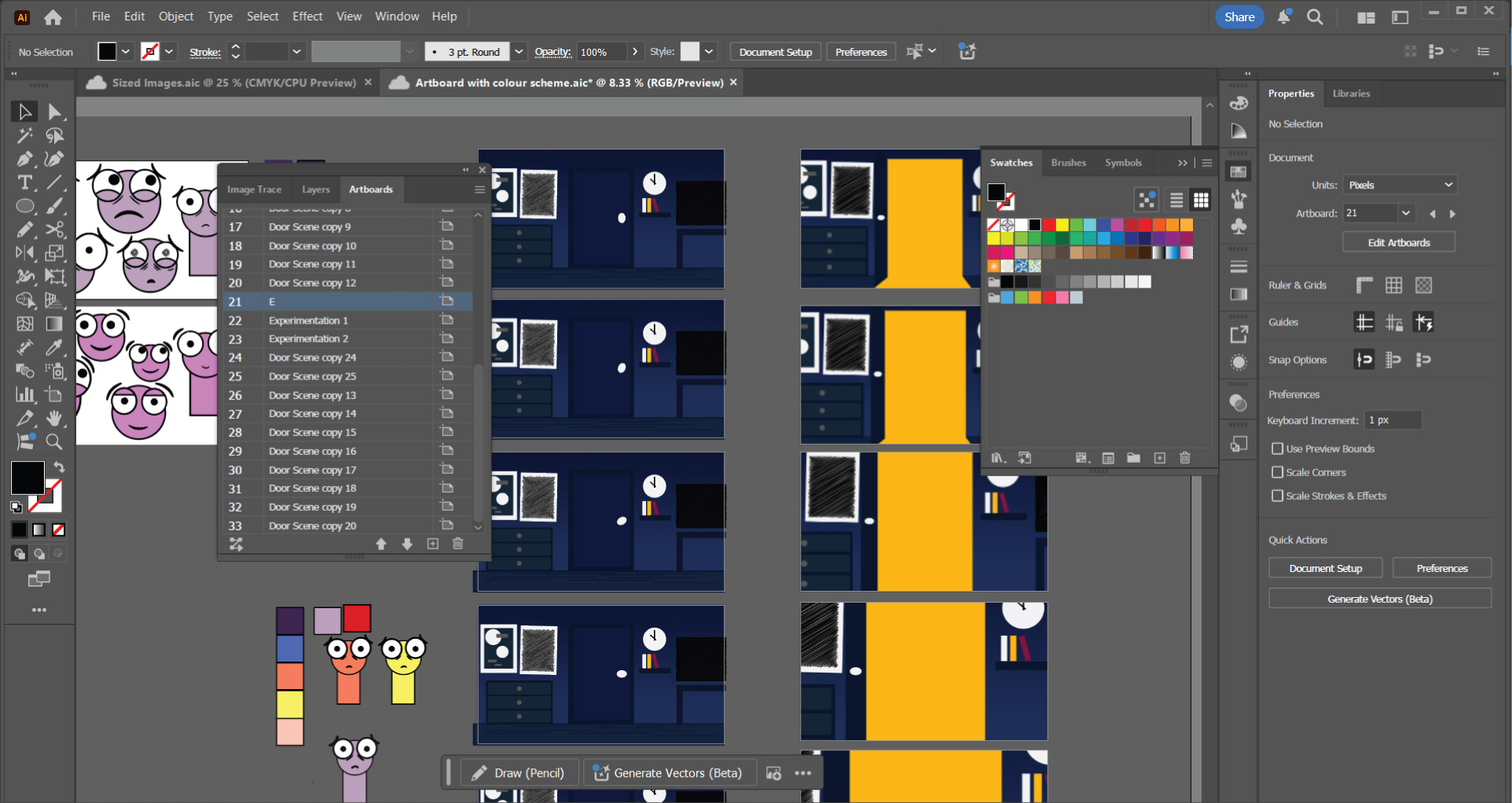
I started off with creating the frames in Adobe Illustrator with each artboard showing the door slowly opening bit by bit. After including the chosen colour scheme the group and I agreed on, it began to come to life.
After sorting out each frame on an artboard in Illustrator & applying the colour scheme, I then took it into AfterAffects and laid out each artboard accordinly to play out smoothly.
Self-Acceptance is a short animation that explores the struggles young men face in accepting themselves and the impact of comparing their lives to what they see online. This animation was created by Priya Ellis, Oscar Pulsford, Charlie Tootell, and Alexander Nessia.
As a group, each of us took on specific roles to bring this animation to life. My responsibilities included creating all the storyboards, character designs, test GIFs, and designing and animating the "Door Opening" scene.
When starting this unit,I was both excited and intimidated to start doing anything related to motion since I have had no experience before hand. Furthermore, with a group of three other people, I knew we would have to communicate well and help eachother in order to work efficiently.
However, I push foward within this project and overcame any fears that I had. There were times where my anxiety almost got the best of me but I managed to push through and work with my group.
As someone who wants to get into motion, I have learned alot from the unit about my current strengths and weaknesses. Right now, this is just stepping stone into the world of motion graphics, and I plan to learned more over time and improve my skills to a certain degree.
This project was my second time working in a group, and I knew that working in a group can sometimes have many challenges.Im glad that my group were a very understanding bunch and I believe my group & I all worked accordingly,efficiently and communicated properly within this unit.
Despite there being many things we could have developed further as a group, im glad this project gave me the opportunity to explore motion since I have a strong interest for it. I now have gained a bit of experience in Adobe AfterAffects and I'm much more comfortable with creating storyboards and planning the animation on paper.
Adobe (2021). Adobe Color. [online] Adobe.com. Available at: https://color.adobe.com/.
CALM (2024). CALM - Campaign Against Living Miserably. [online] Campaign Against Living Miserably. Available at: https://www.thecalmzone.net/.
CTPA. (2022). BLOG: CTPA Survey reveals UK in ‘Self-Esteem Slump’ - Top Eight Self-Care Boosters that could support mental health. [online] Available at: https://www.ctpa.org.uk/blog/blog-ctpa-survey-reveals-uk-in-self-esteem-slump-top-eight-self-care-boosters-that-could-support-mental-health-6226.
Office for National Statistics (2020). Young people’s well-being in the UK - Office for National Statistics. [online] www.ons.gov.uk. Available at: https://www.ons.gov.uk/peoplepopulationandcommunity/wellbeing/bulletins/youngpeopleswellbeingintheuk/2020.